I get their point that you can't provide a "No" in the reminder. But there should be an option (maybe even hidden under "advanced settings - here be dragons!") for this.
Problem is (and that was their argument) people press this button all the time without reading the dialogue at all, and then won't know how to turn it back on. A messenger app has to deal with very technical illiterate people. But there should be an option in settings for the tech savvy user.
Signal is an interesting case study in UX failure. I and a bunch of other tech forward people were on it in its heyday but after they removed SMS support and implemented shitty UX like that nag dialog: Neither I nor a single person I know uses it any more. Everyone is on Whatsapp or iMessage.
It may be cryptographically superior, but does that matter at the end of the day if nobody uses it?
Cryptographical superiority aside, Signal doesn't collect personal data, unlike Whatsapp. For me that's the main reason to use it. The UX is good enough, although some points can for sure be improved.
Whatsapp should be a non starter. What Mark Zuckerberg did to Whatsapp should be required reading for anyone using the internet, and then decide if you still want to use Facebook (never mind, they build a shadow profile for you anyway)
A few of my neighbors have kids the same age as my kids, they're on a WhatsApp group chat, and my choice is either use WhatsApp or make my kid miss out on social events, so it's not really a choice.
"Hey let's switch to this app that nobody else is using and it sends you annoying popups every month but trust me bro it's more secure" is not a winning argument
Every so often I consider writing the "STFU license." Something like GPL but if you use this code, even as a library, you can't give people unwanted notifications. Would need to be pretty comprehensive and forward compatible to cover all the crazy cases that notification-enthusiasts dream up.
This. We must change laws that the above field is not considered as given consent. And while we are at it, we must change "silence is agreement" to "silence is disagreement". This applies to change of ToS, price increases etc. That means if I don't click a link with a button "I agree", the ToS change is not accepted - that means they have to cancel/delete my account.
Didn't FCC remove "1-click unsubscribe" requirement since it can "provide more choice and lower prices to all users across the board" (since the companies can rip off more users and create pseudo-lower prices)?
EU has its GPDR and it has some teeth, but US is currently hopeless on that front, for now, from my vantage point.
The FTC established a "click-to-cancel" rule, but (as with just so many regulations in the US) it was blocked by an appeals court. Federal law says there's a hoop they have to jump through for rules with an impact of more than $100 million, and they didn't jump through the hoop because they didn't think the impact was that high.
I like to frame it like this: "ask me later" is rape culture. It promotes and reinforces a culture of never taking "no" for an answer, and pushing one's agenda/intent regardless of the preference/consent of the other party/parties.
I see the point you're making but this sort of hyperbole has a tendency to turn people away from whatever point you're trying to make unless they already agree with you.
I was visiting a girlfriend once, and she was in the process of moving in the same city. There was a telephone bill on top of her dresser, and I noticed that she had noted "butt-rape fee" next to one of the line items there.
Now she is a very literate woman and loves poetry and "Penny Dreadfuls", so she uses language and words very deliberately. And so, I asked her why she wrote that, and she said it was some sort of unnecessary fee that they were charging to move her line from one address to another, and she clearly resented their opportunistic capitalism.
I certainly sympathized with her, especially since she is the type of woman who has probably been subjected to that sort of actual trauma in her own life, and that of her friends, she had every right to compare the experiences.


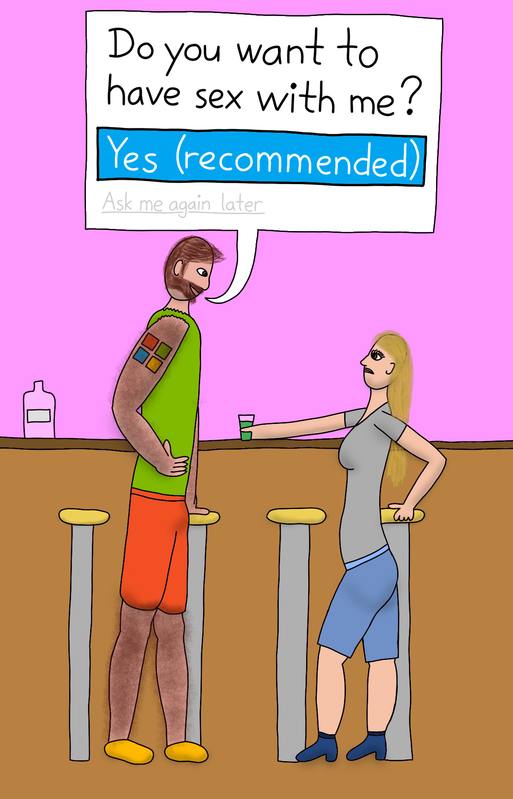
Do tech companies understand consent?:
- [ ] Yes
- [ ] Ask me again in a few days