> A huge trove of secret government documents reveals for the first time how the giants of Western banking move trillions of dollars in suspicious transactions, enriching themselves and their shareholders while facilitating the work of terrorists, kleptocrats, and drug kingpins. And the US government, despite its vast powers, fails to stop it.
> Every American should be horrified by this latest report from the ICIJ; every American should be outraged that the U.S. is now second only to the Cayman Islands for hiding dirty money for criminals.
How about when HSBC was caught inserting punctuation into entity names on wire transfers to evade blacklists so they could transfer around billions of dollars for drug cartels for years. No one got prosecuted, they got a slap on the wrist fine.
The US and Caymans are two very competent jurisdictions hosting financial centers. These countries were formed for liquidity and securitization of resources. Other countries did not prioritize those things, or were not co-opted by entrepreneurs seeking those things, and it shows.
I personally think the outrage should come from the compliance burdens necessary, as KYC should just be sold as a data collection that the government wants, instead of as a terrorist financing prevention method that it is incapable of doing. As the latter, the whole regime should be abolished, but as the former its just par for course. Government wants data, so what.
I opened a Venmo account a year ago and never did anything with it.
I recently rented a house and the landlord wants me to pay with Venmo. I logged into Venmo and tried to add my bank account — error. Then manually. Then debit card, all errors. I knew it wasn’t really an error, plaid showed my bank balance before erroring out.
I had to call their customer service 4x before I found someone who could see that it was a kyc block and put me through the process of verifying myself. Upload documents. Wait for them to review. Then put my account into partial freeze so I could add my bank and then verify transactions. Then talk to CS person and wait for them to manually unfreeze my account.
IANAL but my interpretation of these things: Signing that and performing money laundering would be breaking their TOS and gives them a pathway to remove you based on TOS violations and not have to make a large legal case for it. Visa forms for USA use the same tricks, all kinds of questions about being a terrorist, answering “no” and doing something becomes a deportable offense since you’ve lied on a visa application or misrepresented, and removing the person from the country becomes easier.
Note that it's commercial transactions, not your friends & family payments:
"Starting Jan. 1, the IRS said, if a person accrues more than $600 annually in commercial payments on an app like Venmo, then Venmo “must file and furnish a Form 1099-K” for them — reporting on all the commercial income they collected through the app.
"The tax-reporting change only applies to charges for commercial goods or services, not personal charges to friends and family, like splitting a dinner bill."
I try not to be cynical about news coverage, but its so difficult when I see headlines like this that could be so much more clear by simply adding the word "commercial"... several friends have been outraged about changes to how they split monthly expenses with roommates, partners, etc before discovering the reality of the situation - seemingly all because the reporting on it has just been _bad_.
I don't know if you can even call it cynicism anymore. You just understand the news media business model. Outrageous headline -> more clicks -> more ad revenue. There would simply be less revenue if your friends only had to read one article to get the full picture.
But how will venmo know what is commercial vs. paying rent? If you can mark it as rent and they won’t report, then merchants will just mark everything in such ways. In practice Venmo will just report everything for safety.
It's up to you to the both parties to ensure that the payment is marked correctly. And services like Paypal already have a reason to kick people off who aren't choosing the right transaction type. Paypal doesn't take a fee from friends & family and other gift payments, so it's already in their best interest to find who's abusing it. Also I can't imagine the platform would be liable if they are not the direct cause of misreported transactions.
It's not up to Venmo to report. They are just providing extra information to the IRS to cross check.
Even if you mark it as such in-app; as a business you still have a legal duty to correctly report the income your business made.
Not doing so is already illegal. This just helps the IRS catch this type of fruad easier.
There's no extra taxes or anything - the $600 or more is taxed when reported correctly (as it was before this change, and how amounts under $600 are taxed as well - business income).
Venmo is already trying to solve this by incentivizing users to flag payments themselves.
When you go to pay someone, there's a pretty big box on the screen that says "Are you paying for goods or services? Protect your purchase here" with a little toggle button, and an explanation that the seller will pay a fee in return for you being able to get a refund.
Part of the problem is bad headlines. A larger part of the problem is the fact that when people get their news from social media, they read only the headlines and don't bother with the story.
Somehow people have become convinced that reading a stream of half-sentence headlines is the same thing as being informed about current events.
Ah, cool cool, so when the IRS accuses you of committing tax fraud because you have $12,000 of undeclared "income" due to your roomate venmoing you their half of the rent, you just have to simply prove to the IRS that you aren't a criminal!
If your roommate is tagging rent as a "goods or service", you're losing 3% to credit card fees on each of those transactions. I doubt many people are doing that. If you use the "friends and family" transaction, then there is no reporting or fee.
IRS to my mother: You didn't report your income from XXXX on your tax return.
Mother to IRS: I've never even heard of XXXX let alone worked for them. I'm retired.
IRS to mother: If you believe the 1099 is wrong talk to the company to get them to fix it.
Mother to IRS: I have been unable to even locate XXXX, please provide me with contact info.
IRS to mother: We are not allowed to give out such information.
I was off at college at that point and don't know how the situation was finally resolved.
When I got a bad 1099 my former employer even sent out a letter explaining the problem (a bogus entry had made it onto all of our 1099s) and how to dispute it with the IRS but in that case they weren't going to be contesting it--the company had already gone under. I'm pretty sure my mother's case was an illegal with a forged SS card who used my mother's information--the company would contest a dispute over a 1099 because by their records it was correct.
I've never had a problem ultimately resolving errors by the IRS. I'm sure that's not universally true, and it does take forever.
Respond immediately if you are notified of an issue. If you are actively working to resolve the issue that will help avoid getting in a situation where wages are garnished or liens issued.
Do everything in writing, sent by registered postal mail. Nothing they tell you over the phone is official.
Keep copies of everything related to the issue forever.
I believe the objection people have is to ever being put in a situation where you have to explain yourself anyways, even if you're innocent. "Just be polite to policeman, calmly explain the situation and he won't hurt you."
The optimal strategy is to avoid interaction/scrutiny whenever possible because every interaction adds a non-zero chance that someone with a quota/chip on their shoulder/bad day is about to ruin you.
This is asinine. If the government wants to tax all transactions you make they'll tax all transactions you make. This doesn't make that any easier.
This is the government adding reporting requirements for transactions that are already taxable. It's just covering a gap where transactions weren't being reported.
You can manually specify the type of transaction through Paypal as either commercial or personal. If these payment processors are building an infrastructure to report commercial payments, I posit they can re-use the code for personal transactions as well. It might be as simple as changing a few boolean flags.
Realistically, a few years from now Janet Yellen will testify before congress that people are laundering money by flagging transactions as personal rather than commercial and that the Treasury has the authority to require Venmo, PayPal, and Zelle to report all transactions in order to go after tax evaders and people not paying their fair share. To calm any outrage, maybe they'll raise the threshold to $1,000 as a conciliatory measure.
From a code/business standpoint this absolutely makes things easier to report on personal transactions.
My point was the thing stopping Venmo from reporting on your personal transactions is not technical. As soon as the government tells them they need to report, they will comply.
Your second point is possible, but I don't see how this move really gets us closer to that, other than providing data that could be used to make the argument.
How is this different than the transition to requiring online transactions to charge sales tax?
>"How is this different than the transition to requiring online transactions to charge sales tax?"
The biggest difference is that we are dealing with a federal entity. When it comes to state sales taxes, that payment is handled by the merchant and I personally don't need to file a return with the City/State/County documenting my transactions and sending a payment or asking for a refund. The businesses themselves need to do this, and that is not unreasonable for a business.
The other difference is that the IRS' system of voluntary compliance is essentially a reconciliation of our own record book and the records that have been submitted to them. They usually match because the average person just pays income tax and that is handled by W-2's and employer withholding. When Venmo, Paypal, and Zelle report that you've done over $600 in transactions, they now have cause to ask you if you should have been paying any capital gains on those transactions. That also requires bookkeeping that you have probably never kept track of. As you probably never bothered to save the receipt on that couch you bought 10 years ago and just sold.
Here is one other scenario, let's say I loan a friend $600 through Venmo. The IRS will only know the amount of the transaction, not the context. If I get audited and tell them it was a loan with no contract, will the IRS accept that as proof it was a temporary loan and not a gift? Will they suspect I actually bought drugs? And so on. While the IRS has a record of all transactions, they will want to know what kind of transactions were occurring and will want to know why the numbers in your 1040 don't match what they are expecting from you.
Exactly, they pass loopholes and exclusions for the wealthy who own 90% of the wealth in the top 5% or so of the population and throw scraps to fight over to us peasants and then tax those scraps hoping to imprison us and show us how insignificant we are.
You have to be quite gullible to fall for that. If the government were to rely on people honesty, then why do this in the first place? If you were to mark these transactions, then you'd also include them in your tax return.
This is just to get their foot in the door. Once it's there, it's much easier to expand the surveillance activity.
The fun here stems from the fact that many small business owners use the friend-to-friend side of these payment services. These services either will be cracking down on business use of those accounts (and thus push people off their platform), or they will be forced to report all transactions across all accounts.
The fun here stems from the fact that many small business owners use the friend-to-friend side of these payment services.
Unpopular opinion, but I'm OK with eliminating this loophole.
I went to a record shop a couple of weeks ago and when I went to pay, the guy didn't take Apple Pay. Or any kind of credit card. All he took was Venmo and Facebook. Fortunately, I had cash. But if you can't even shell out $5 for a Square reader to take credit cards, you're not a business — you're a hobby.
And yes, I have owned small businesses before. Three times. Each time, I took credit cards as payment. It's known as "cost of doing business." No different than paying to put up a sign, or renting a storefront.
Sometimes vendors don’t offer credit cards because their own credit is not good and they can’t get a merchant account. Or if they can it’s with huge per-transaction charges. This is particularly problematic when starting out and not having enough sales to get better rates Eventually when/if they grow they qualify. With the emergence of Venmo et al the chronically small vendor may never be motivated to get credit cards.
For low-volume use the cost is a noticeable percent. If the lost business due to not taking cards is less than what you would pay in transaction fees it's the right decision.
Not a crime, as long as they are reporting the income on their tax returns.
However, it is definitely against the terms of use and will get their accounts suspended. As PayPal has shown, they might also confiscate any money left in the accounts.
Or maybe the government should keep their grubby mitts off my money until they’re willing to go after the billionaire class. But the IRS only prosecuted about 1500 tax fraud cases last year, so you’re probably not going to jail. Enough stuff in this world is illegal that a little cash under the table is no big deal.
The services don't seem too concerned about small businesses abusing the friend to friend options for their own purposes, so I can easily see it being the latter.
If you pay someone as a business, they eat the transaction fees. If they have you pay as a “friend”, then the customer pays additional fees, increasing the total cost of the transaction. Any business doing that is breaking the terms of use. I can imagine it only a matter of time until they start suspending customer accounts for not flagging such transactions.
That means we will have to see how hard they crack down on f&f payments which are default in certain trading circles with a separate reputation system to manage fraud.
This seems like a direct a attack on small businesses, it looks like neighborhood kid cutting grass has to pay taxes while Amazon doesn't. The opposing political party is going to get a lot of press out of this one.
Amazon avoids taxes with lawyers. Much as you dislike it, it is all legal under the current laws. Small businesses avoid taxes simply by not reporting income.
Most people including myself don't care what is legal or illegal, if something is a victimless crime and there is 0% chance of getting caught they will go ahead and do it. What most people also care about is hearing about Amazon's treatment of employees and then hearing they don't pay taxes, what is illegal is secondary to what is ethical.
now the neighborhood kid is getting audited while Jeff Bezos goes to space tax free
amazon has revenue of $457B. 1% of that is $4.57B.
so, while amazon might be able to keep $4,570,000,000 in profit, not sure your small business owner making $1MM in revenue will be ok with $10,000 in profit.
This is an argument for marginal income taxes, which we already have. Perhaps the brackets need to be adjusted, but there is a system that already tries to reduce the burden of an entity earning much less than another.
It is also an argument for repeal of personal income tax.
The feds can print money to bail out the banksters and fund forever wars, so they can also relieve me of the burden of the personal tax compliance headaches and drop the personal income tax.
People don't like to acknowledge the difference between tax evasion and tax avoidance. Amazon always avoided taxes, which was legal and is still legal. The neighbor kid often evaded taxes, which was illegal and is still illegal - just slightly easier to enforce after this change.
The problem is that tax avoidance is an economy of scale - it's easier to avoid taxes the bigger your revenue stream is, and as such follow the letter of the tax law while completely subverting the spirit of it (whereas the gap between those is far narrower for small players without a multinational presence, multiple subsidiaries, etc). The flexibility goes up, and the legal cost of doing so (which has a fixed lower bound) becomes a proportionally smaller part of your costs and has a higher ROI.
I do not know what the "spirit of it" means. Obtaining records from big companies facilitating money transfers does not mean tax liabilities have changed for anyone. If big companies are getting away with not paying their fair share, then laws should be changed prevent them from doing that. But they can simultaneously happen.
However, most examples given of supposedly nefarious tax avoidance I see are simply businesses that plow a ton of money back into expanding the business, hence bringing their tax liability way down, exactly as the law intended. Amazon being the prototypical example.
Or even better, is the complaining of billionaire's having low income tax...when they have low incomes. The better use of time and energy would be to propose additional property (wealth) taxes.
>the complaining of billionaire's having low income tax...when they have low incomes
Just because they take a $1 salary and get paid in stock or have tons of stock holdings that increase in value instead doesn’t mean they don’t have any money to play with to cover their own personal needs / desires, as I’m sure you’re aware. This is what people mean about avoiding the spirit of the tax while adhering to the letter of the law.
From what I understand, they way they do this is to get millions per year in personal loans from banks, secured with their stock. Then, instead of “income”, they have “debt”, but most reasonable people would still see that as “they can spend millions of dollars on whatever they’d like and they didn’t pay tax on it”. Most people would love to do this, the problem being they don’t have hundreds of millions+ in stock to secure those same types of loans.
I’m sure every politician working with tax law understands how they play the system (and how tax offshoring works for companies), yet they choose to do nothing about it as not enough lay folks complain hard enough to affect their next election. Combine that with “the car dealership” / “ISP” model, where “if we all agree to do the bad thing and hold the line, people will have no choice but to let us continue to do the bad thing”. There’s no political will to fix it among those in power, as they benefit from it too. This is why I have very little hope of ever seeing real tax reform in my lifetime in this country — the politicians willing to actually carry out the will of the people or engage in topics that would materially benefit the masses are few and far between. It’s much easier to keep everyone frothing at the mouth over tie pins and tan suits.
I do not either. I was pointing out that, functionally, no one intentionally chooses to pay more tax than they have to. Hence the uselessness of bringing up tax avoidance. Amazon spending all of their revenue to expand the business and hence not owing any tax is tax avoidance, and people contributing to tax advantaged retirement/health/education accounts and deductible charitable expenses is tax avoidance all the same.
With this strict standard, what do we do with 11+m illegal immigrants in the US? Getting paid in cash, are they indulging in tax evasion or in tax avoidance?
First, many of them aren't cash only. Second, a single enforcement mechanism of the IRS isn't supposed to catch all infractions. The IRS, and other federal and state agencies, have other mechanisms than asking Venmo to report transactions.
That's obviously a different beast. To deal with a bunch of folks getting paid under the table, the obvious answer is to jail the person paying them in cash, and then investigate them to see if they are exploiting folks in other ways as well. Without exploitation of this sort, folks without paperwork find it harder to be employed.
If you want to reduce illegal immigration, a good starting point is to look at laws and make sure they are not only fair, but easy for the would-be immigrant to follow. Most folks in the US 'illegally' started out being legal, after all, and you realistically want to close that gap.
And so we are clear, asylum seekers aren't "illegal".
Paying folks under the table is a sign of exploitation - and undocumented folks easily fall into exploitation. I would have thought a fair reading would have come to this conclusion. Of course it isn't always that way.
It may be a misreading, but not an intentional misrepresentation.
I suppose it depends on how you interpret the term "exploitation". Most frequently this is used implying some harm is being done to the exploited party. My comment is to argue this is not the case here, as they would be strictly worse off without this employment. The employer is certainly exploiting an opportunity to employ the undocumented worker, but (arguing about words here) that does not constitute them "being exploited". Arguably, both honest tax-paying employers and employees are "being exploited" by the government by way of it collecting income tax.
Depending on your point of view, the greatest harm here is either self-inflicted by the worker, by coming to the country and putting them self in this situation, or by the government, by inventing rules dictating that a person is not legally allowed to work, punitively disincentiving their becoming "documented" with the threat of deportation versus the convoluted immigration process, etc.
Giving it some thought, I can relate that there is some potential for exploitation in the sense that someone working under the table does not receive the same protections that a legal worker would under law, but it seems moot when the same government promising those protections says you're not entitled to work at all. Considering this, rather than outright condemning the employer, I defer to asking whether the employee is better or worse off in the end.
Only if the neighbor kid earned more than the minimum filing requirements. For the IRS that's generally >$12k per year unless the kid is married but filing separately.
Yes. As a kid I mowed the yard of a rent house down the street a few times. Unbeknownst to me they reported to the IRS and my dad didn't. Time passes, IRS sent my dad a bill for more than what I earned mowing that yard.
That can't possibly be true. There's something big missing from this story because you will never end up being taxed more than you earned. And the income shouldn't have been attributed to your dad since the money was being paid to you. And you certainly didn't earn anywhere near enough to meet the minimum amount needed to even pay tax at all.
I definitely have parts missing from the story since it was a long time ago, early to mid eighties--the part I do remember is my dad's mild disbelief and feeling terrible that I had caused it.
Not who you're replying to, but my take is that if everyone complied with their tax obligations correctly, nobody should have filed or owed taxes. The kid should probably have been a household employee. A household employee under the age of 18 is exempt from Social Security and Medicare taxes.
In addition, if they made less than their standard deduction, there would also be no income tax liability or filing requirement.
What probably happened was that the kid was incorrectly sent a 1099 form. This is wrong for two reasons. First, it's not needed for a personal residence or rental properties for investment, only for businesses. Second, a household employee is not a contractor, and should generally receive a W-2 (or nothing at all, in the kid's case).
I wouldn't be surprised. The current party in power isn't doing anything to force big corps to pay taxes, and the opposing party is even more passionate about not doing anything.
This closes, beginning 2022, a huge loophole (reporting omission) that has existed for the last several years. IRS Form 1099-NEC & 1099-MISC reporting did not include credit card or other 3rd party payment processor payments, while Form 1099-K also didn't include them unless relatively high thresholds were reached.
Now, many more such payments will be reported, encouraging more taxpayers under the U.S. system of "voluntary compliance" (self-reporting attested to under penalty of perjury) to be honest.
How much revenue will this actually raise? The previous threshold was $20k which makes me think this new policy will mostly just result in the IRS catching the neighborhood bike repairman who made $3k last year on Venmo and didn't report it rather than some shadowy ecommerce millionaire tax cheat.
According to the treasury, the total gap is about $600B/year.
> To further ensure that everyone pays their fair share, the Administration also calls for using information that financial institutions already possess—without imposing any burden on taxpayers whatsoever—so the IRS can deploy these additional resources to audit more sophisticated tax evaders. These changes to the third-party information reports are estimated to generate $460 billion over a decade.
So about $46B/year from reporting changes.
However, contra your intuition that this will mostly impact marginal contractors, the treasury claims that the misreporting is progressive and higher earners misreport more income.
This is more legislative theater. "We're catching the cheats" where the cheats are as you describe, middle or lower class households or individuals trying to get ahead with a side hustle. I hope to see this reversed in the near future.
The side hustle on etsy will likely have plenty of expenses that come off the income--but now you made the person do things like maintain inventory and the like. The compliance burden is a lot higher.
I'd like to see some modified rules for sufficiently small businesses--no inventory, no depreciation, you simply take expenses when they are incurred. This would especially apply to service type businesses where your expenses are consumables and tool replacement.
There already are rules that avoid most depreciation in this case. The Tangible Property Regulations allow a De Minimis Safe Harbor expense deduction for assets purchased, such as a computer or office furniture. The max amount is $2,500.
There's another reply in this post about a scenario of selling a couch on Craigslist, as an example. The burden that comes with a simple transaction is undue.
> encouraging more taxpayers under the U.S. system of "voluntary compliance" (self-reporting attested to under penalty of perjury) to be honest.
Ha, yes that is a funny fallacy they use. On the IRS side, they use a social graph and node based system to determine who to look into.
If one filer takes a tax deduction for a payment, the IRS then looks to the recipient to see if they paid taxes. When a mismatch occurs, typically of the recipient, they send out the "we determined that you owe us this much" letters.
From my experience just talking to people, a very large number of people really believe that only their employer or a their bank is "snitching" on them, and whenever they get a payment outside of those systems they think "they don't have to pay taxes" because "the IRS doesn't know". I really am at a loss of words of how deep tax ignorance goes.
The 1099 system and compliance behind the 1099s is also a helpful notice for the IRS' graph system, although not necessary as they can just look at the same filer's deductions, but they can coax more payments as they do have statutory penalties for not filing a 1099.
If I sell my old couch at a loss for $600, and get paid with Venmo, the default behavior now is to have a form sent to the IRS. The burden is on me to prove it is a loss and have the documentation to back it up, or risk having $600 of taxable income in the eyes of the IRS. At this small threshold, it sounds like a burden to me.
Separately, even though selling used goods at a loss is deductible on income tax, you can still get chased own for sales tax, thanks to USA's absurd non-VAT sales tax system.
>even though selling used goods at a loss is deductible on income tax
Not if the goods were for personal rather than business or investment use. Losses on sale of personal-use assets are non-deductible for income tax purposes.
1) Selling used goods at a loss is not deductible on your tax return unless you are in the business of selling used goods.
2) Unless you are selling a lot of tangible goods (i.e., you have a business selling things), you aren't even eligible to register for sales tax in most U.S. states.
3) If tax applies to the sale of a used good in this situation, it would be a use tax that is the responsibility of the buyer to report and pay.
>Not worth the hassle of paying legally-required income tax?
In many areas of economic activity, there is a level of operation where the costs of complying with tax requirements far, far exceed the costs of the actual tax due.
A good example of this is trying to operate a small, wholly-owned foreign company while a US tax resident. The costs of filing a complete form 5471 can be many thousands of dollars at a minimum (and potentially much higher), even if the amount of tax due is negligible or even zero.
I don't know if there's a term for this, but it strikes me as a kind of deadweight loss, where tax authorities gain tiny amounts of additional revenue to but tax payers spend much larger amounts on compliance.
My concern with sending more and more information to tax authorities is increasing these kind of deadweight compliance losses for small operators who will owe little or no additional tax.
I've done web/software development on the side. I used to have an S-corp, but dealing with IRS filings was a pain, so I started using Gusto. But that cost a lot relative to my quantity of work. I've since closed my corp (what a hassle that was!) and am thinking of hanging up my hat completely because its just not worth the hassle of quarterly filings, annual tax surprises, paying the additional turbo tax fees.
I also run a local youth baseball/softball lessons. I push all received funds into a paypal account. I don't profit from it, I just pay for field reservations. All money in goes out. But now, I'll have to jump through hoops. Now I ask myself if its worth it training other people's kids for free.
To be fair, most of the taxes we American citizens have to pay were enacted long before the IRS ever had a system to actually monitor and record our transactions.
Another poster mentioned selling a used couch for $600 and having that be reported to the IRS. It would then be incumbent on the seller to prove it was a loss and not a capital gain. Now I assume the auditor would let the seller off the hook for something like this, but the key point is that a transaction that no one was reasonably expected to report is now reportable and must be documented.
I'm probably not paying some taxes right now that I'm legally required to pay. But it's not because I'm trying to cheat the system. I just really don't understand it. I've been involved in a total of one tax problem, and it was a nightmare. It stemmed from me submitting a form to the IRS that I evidently should not have. I would have been much better off if I literally filed and submitted nothing, and just waited for to receive the formal nasty-gram. So the hassle is in having a transaction recorded in a system that's going to create problems for me. I mean, if I had on oracle that could tell me what taxes I actually owed, I would just pay it with no problem. In fact, I would pay for that oracle. But as it stands, it's all too confusing. Cash seems safer.
>"encouraging more taxpayers under the U.S. system of "voluntary compliance" (self-reporting attested to under penalty of perjury) to be honest."
I really dislike the implication of dishonesty. For the average person the IRS is involved in your paycheck, not in your Venmo transactions and Facebook Marketplace postings. I sense this kind of reporting is only going to create resentment, and I hope it does.
Edit: I Venmo my sister money for groceries and pizza from time to time because she is in college. I'm well under the threshold for the gift-tax (as long as you are under ~$14,000 a year), but now the IRS has a record of all these transactions I have even more to worry about when it comes time to file. What happens if my "payments" are ~$700 and I don't put that amount in the gift column on my 1040? What about her? Does she need to report this as well? The IRS will know about it.
Sure, you could say I was supposed to be reporting this the whole time, but is this a reasonable expectation for transactions so minor and mundane? Were you reporting such things this whole time?
Yes they weren't draining enough of our incomes already. This should make everyone very happy that we have yet one more avenue for the government to spy on us everyday in every way. This is double plus good.
It's crazy these threshold dollar amounts seem to never increase.
$600 reporting requirement has been $600 forever it seems. It used to be my annual lawncare expense was less than $600/year. Now I pay roughly 2x-3x and it's over $600 so I am shouldered with this burden due to inflation/COL/time and a fixed IRS dollar amount.
Just like how cash transactions >$10,000 need to be filed with IRS. That was set in the '80s I believe, when $10,000 in cash was much more substantial. It's not increased with time so the reporting burden just becomes more burdensome. Pretty soon a trip to the ATM will trigger an IRS report.
The interesting thing is that to use Zelle, you have to have an account at a participating bank (which did stronger KYC on you when you opened your account, as opposed to Paypal/Venmo). So there wouldn't be a need to issue 1099s when authorities can contact the bank directly.
Also, I would rather trust my bank than PayPal when it comes to giving out my ID or SSN. Zelle will probably become more popular in the future.
> So there wouldn't be a need to issue 1099s when authorities can contact the bank directly.
It's so the taxpayer is aware of what to report on their taxes and is aware of what is already being communicated.
Just like a W2 employee get's a W2 so they can do their taxes. It's already been communicated to the government.
As a taxpayer in our system, these documents basically serve to say "this is what the IRS knows already. When you file your taxes, you probably want to do so in a way that they can make sense of and sufficiently validates your tax payment as accurate"
>Also, I would rather trust my bank than PayPal when it comes to giving out my ID or SSN. Zelle will probably become more popular in the future.
I've switched to Zelle from Venmo for Craigslist sales, not because of this issue but because Venmo now charges a fee even when using my personal account.
It took me about 3 weeks to realize that all the major banks supported Zelle... how crazy is that? And then I looked into its origins and discovered that it was all the big banks getting together to say 'hey, lets keep the money in our system'
So it is not surprising to me that they probably lobbied somehow to be excluded since Zelle is a "cash replacement" sponsored by the banks.
Zelle is supposed to be only a pay-your-friend system as it lacks chargeback capability and the like. Thus it's quite reasonable for it not to be involved in reporting business income--it's not supposed to be handling business income.
We've always had to issue 1099s for any contractor we pay more than $600 to. If you earn income, you're required to pay taxes on it. Seems to me the outrage is over closing a loophole.
Receiving a payment may or may not be earning income.
A lot of people use these payment services to sell used personal goods for less than they paid (often, significantly less), which is not income. But now, they'll need to keep documentation of cost basis of their household goods, in case they sell them later.
Even if you're selling used goods for profit, only part of the sale is income.
Yes, it does create a business burden. However, many sales of personal goods have some sort of tax burden (not the same, but for example, when you buy a car from an individual you are expected to pay tax on the purchase)
I run a small resales business, and I do track COGS on sales. I often sell my personal items as well, and when I do, I just put the COGS as the sales price.
My understanding is that the outrage is over spending time and money codifying new laws to collect taxes for small transactions instead of spending time and money codifying new laws to collect taxes from large tax-avoidant businesses and wealthy individuals who both are in a position to pay much more and who compared to average people pay basically nothing.
Because they knew no one would read it. There's a lot more in there and the infrastructure bill too. Like a remote kill switch for vehicles to be used by law enforcement in the infrastructure bill. Democrats love hiding unpopular stuff in gigantic bills because they no no one reads them or even has time to before they are passed.
this is one reason I did care about them squashing the next big spending bill. It shoudl be split up into smaller bills so they can't hide as much pork and invasions of privacy like this crazy new law (from OP).
Because while telling everyone they were going to pay for the trillions in stimulus via taxing the rich (spoiler: they wont), they had to include things to actually increase revenue and tax enforcement on the middle class while saying you're going to help them isn't a great campaign strategy.
A bill is a changeset to law. It has a title that is generally aligned with the major intent. Otherwise the bill as a whole acts like a freight train; the major intent is the engine and whatever else ready to be merged is hitched onto it.
I run a very small business through PayPal. This won't change anything for me. I'll get a 1099 form telling me what I already know.
At the same time, I frequent a web forum for musicians, many of whom buy and sell instruments. I don't think most of them are thinking of it as a business, but simply enjoy trying different gear and flipping one piece to finance the next one. Many musicians also earn a certain amount of cash income.
"Never ascribe to malice that which can be adequately explained by ignorance." Discussions of tax reporting and the new PayPal rule seem to express as much confusion as annoyance. There is a widespread belief that cash income is not meant to be taxed. I think this might be due to a number of reasons, notably the fact that most people don't do their own taxes any more. Your obligations end with handing a sheaf of papers to an expert, who works on your return and (hopefully) hands a check back to you at the end. Also for this reason they don't see a difference between reportage and taxation -- a rise in reportage is equivalent to a tax increase. And they don't understand marginal taxation, so they assume $600 means they have to send $600 to the IRS.
On the other hand, those of us who really did run businesses qua businesses, and filled out our own Schedule C's (even through TurboTax), see exactly what goes into the calculation and what comes out the other end. There's a place for 1099 income but also for non-1099 income. We were already paying those taxes.
A minor disruption is that people will have to manage their personal affairs more like businesses, most notably maintaining records of their purchases so they're not on the hook for the entire sale. Buying a guitar for $600 and selling it for $601 gets you a 1099 for $601, but you only owe your marginal tax rate times one dollar. Still, knowing the cost basis so you can work it out correctly requires keeping records.
When I bought a new instrument a decade ago, I did some reading on the tax implications. I was ready to splurge on something nice. There was a fascinating case of a musician who bought a super expensive 200 year old instrument. He amortized the expense over some period like 7 years. Then he was invited to come on down to the tax court for a friendly chat.
Turns out, the tax court didn't smile on depreciating an appreciating asset that demonstrably lasts 200 years.
I actually considered buying an instrument in salvage condition and paying to have it restored, since restoration is an expense. But in the final analysis, I was more interested in playing than screwing around for a few dollars in tax savings.
Why? This is a serious question. Seven years is the correct time period for musical instrument depreciation. And if I recall, any property than can be depreciated must be, and if not will be treated as if it had on sale.
Besides, if it’s ever sold there is recaptured depreciation which counts as income.
I never let money accumulate in Paypal. As soon as someone sends money / buys something, I send it straight to my bank. I've heard too many horror stories of Paypal putting money 'on hold' and people having no recourse from that (since Paypal have largely shunted support to algorithms and very extensive FAQ sections that cover every issue so you don't need to reach, you know, an actual human).
I believe this is most likely going to hurt hair cutters, strippers (and similar sexy workers like ig models), others who get tips like valets, small time weed flippers..
These folks might get reported for higher amounts and not be able to write off expenses (easily or legally) and so will be easy targets/victims of this reporting.
Most Etsy sellers can write off some expenses for materials easily, and johnny mowing lawns can likely claim no need to file with total income below threshold, do those won't be worth much time.
This is going to devastate some people with very large and unexpected it's bills.
Just goes to show you how greedy the IRS (and federal government is), they'll go after your 14 year old baby sitter and try to jail them because they earned and worked hard enough to buy a cheap clunker car to drive for when they turn 15/16. Require them to file taxes and keep detailed paperwork for exactly how long you babysat little timothy on March 15.
I don't use Venmo a lot, but I did notice a "purpose" button when I was in there the other day, I wonder if that's how they figure out which of these transactions are commercial payments, or if there's some other way to do it.
If I remember correctly, the default option was "Personal gift" or something like that. Is it technically fraud to forget to flip that option now? The app didn't explain any of that to me...
That started before this but it is how they will classify it. It was already against the terms of service to do that (albeit quite common on a small scale) as it prevented the processing fee from being charged.
It would get reported to the IRS as revenue. Since you're selling that item for less than you paid for it, and assuming that you didn't depreciate it as a business asset, you have a net loss, and shouldn't have to pay tax. The question is going to be, how does the IRS handle reports like this?
No, because this only applies to commercial transactions (and PayPal always asks you to specify whether a transaction is personal or commercial in nature).
People find this to be unfair because it will increase the tax burden on the "mom and pop" business tier while larger businesses continue to (legally) evade taxation.
If we stop taxing businesses we could simplify the tax code and outright remove the entire capital gains category. We will never win this game of cat and mouse. The more we try, the more the burden will move down the economic ladder.
See this is irritating because of the people I know, the vast majority of electronically transferred dollars are from one family member or romantic partner to another. These people don't have the ability to adequately defend themselves from official letters saying they have to pay taxes on their mom supporting them through school or their boyfriend paying their insurance.
While it sounds like this headline is missing a "commercial" modifier needed to clarify what this applies to, I currently use Zelle for sharing expenses with my S/O. Does anybody have any suggestions for a replacement service, or is Zelle as good as it gets in the USA? Concerned that I'll eventually be paying taxes on my rent and beer splitting.
> Concerned that I'll eventually be paying taxes on my rent and beer splitting.
You already paying those taxes through whoever bought the beer etc, so you wouldn't owe anything. But what I think could be a headache is now increased record keeping around those transfer payments -- ie; your S/O received net $x in payments from you and may now need to report and justify them.
No, as long as you don't mark the transaction as payment for a good/service i.e a commercial sale then it doesn't get reported or counted towards the $600 limit.
This is exactly the same distinction Paypal has made for over a decade; if you want purchase protection on a transaction then they collect a percentage and (now) they will also count it towards the seller's $600 reporting limit. If you are just paying a friend back you don't want to pay the transaction fee anyway and you don't need purchase protection either.
Could a hypothetical individual just charge 599, and then charge again for more? That even sounds like a stupid question, but I've heard this 600 usd number in the headlines yesterday and this morning, so I wonder the semantics.
Great, let's nickle and dime the single mother selling arts and crafts on Etsy while the mega corps get away with billions.
This was buried in the same legislation supposedly drafted to help the poor. But of course, the fattest handouts were all to big banks and the rest of too big to fail corporate America.
Income tax was supposed to be temporary. It shouldn't even apply to people making under a certain amount because they have very little disposable income. The first say 50k, probably more, is eaten up pretty quickly by expenses. That's why so many people take out massive loans and go into credit card debt. I honestly think taxes like this are meant to subjugate what's left of the middle class and keep them from gaining financial traction.
>Nearly 61% of U.S households paid no federal income taxes during pandemic-stricken year of 2020, because of declines in income and boosts to government subsidies that wiped away tax liabilities, according to data from the Urban-Brookings Tax Policy Center.
thanks you saved me from having to go look that up. Notice the person who posted that didn't also post how much of the wealth and revenue went to the upper 39% lol.
Yes. But when it was temporary there were also very little in terms of federal social programs that people have become quite fond of. Do you propose we get rid of those safety programs along with the income taxes that help pay for them?
I'll take the even more aggressive tack than the other people who have replied to you: it actually is still a social safety net. Even people who (supposedly) bilk social safety programs have dependents, and those dependents do not deserve privation because you disapprove of their guardian's behavior.
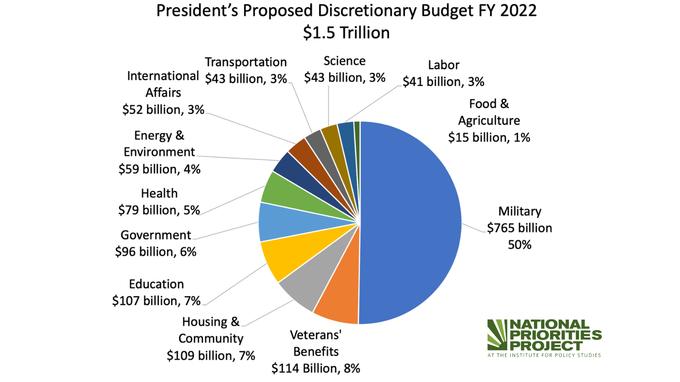
Have a little perspective and focus your ire on our ridiculous military budget (which is also a welfare program, mind you) instead.
Great, let's get those people off of it. Any company that doesn't pay their employees a living wage should have their taxes balloon to offset that safety net.
I think we disagree on the definition of social safety net. Social safety nets “improve lives of vulnerable families and individuals experiencing poverty and destitution.” Sure, temporary assistance is a subset, but duration isn’t part of the definition. For example, pensions are part of the social safety net as is social security. Both (in theory) continue in perpetuity to fund ones “lifestyle”
I think "people who stay on it as a lifestyle" (how many is that, really?) are far less of a concern than the people who are stuck on it because even working 2-3 jobs isn't enough to climb out of poverty. Kroger and Walmart employees rely heavily on the social safety net, for example, and some of them are even homeless despite working (https://www.businessinsider.com/1-in-7-kroger-workers-homele...)
Welfare queens are a rounding error. Manufacturing a persistent underclass is the problem.
There are tons of potentially productive members of society languishing because if they made any serious progress toward improving their lives they'd lose their benefits. The outcomes for children born into such households are... not great.
Disallowing corporations from putting their earnings in off shore banks and then taking low interest loans to pay for stuff in the US against their off-shore holdings. As an example.
I.e. close all tax loopholes, and make the tax code more sensible, so that you're not forced to cheat or end up uncompetitive.
I’m not saying it come tax is oppressing lower socioeconomic classes or that they disproportionately pay into it.
My point is the opposite. The income tax system helps those classes by funding social programs and we would either need to pare back those programs or find alternative ways of funding them
I started writing my comment with the assumption that low income earners weren't paying that much in taxes, then napkin math pointed that they may be paying an order magnitude more than my expectation. Is my napkin math accurate?
I don’t know. Maybe I’ll have time later today to look for research on the topic. I believe it’s the typical case that low income earners pay less (in federal tax, at least) as that’s the point of a progressive tax structure
> Whatever happened to “Hey, I have some apples, would you like to buy them?” “Yes, thank you!” That’s as complicated as it should be to open a business in this country.
With sympathies to Ron Swanson though, I don't think it can really be that simple.
In America today, for many types of businesses, it's still that simple. You can open a sole proprietorship business with zero paperwork and no permission from anyone. You're not required to incorporate. You're not required to have a separate bank account.
Now, if you're selling apples (and other foods), you may have to deal with health code regulations. If you open a dentist office, you'll probably fall under other regulations. You can argue if those regulations are too heavy or not.
But many products/services in do not have many (if any) regulations governing them in most states/municipalities in the US. Just say you're in business and voila, you are.
I think this greatly oversimplifies the situation. If you find that people love your apples and are buying them too quickly, you might want to tell a friend you'll that if they'll help you sell your apples you'll give them some of the money. You've now incurred numerous tax obligations, requiring an EIN, PRWORA reporting, worker's compensation, citizenship requirements, required benefits, time tracking for overtime compliance (depending on FLSA designation), insurance obligations, and probably several other steps I'm missing (occupational licensing is a big one; let's hope your apples aren't really hair cuts).
Do all these requirements protect people from their employers? Well… maybe kind of. But no, in most circumstances you can't simply start interacting with other people without a lot of red tape.
As someone that has to file my own 1099s to people I pay, I feel this routine nickle and dimes me more than this new thing, since its so punitive to do and wastes my time.
This new thing is just the payment processors filing their own that just gives the IRS insight into which tax filings to match up.
A single mother selling arts and crafts already had to report earnings. Reporting doesn't mean there is a tax due. The single mother likely has many tax deductions possible just like the mega corps do.
You might want to look into tools like Wingspan to save up some time with the 1099s. Even Gusto's contractor plan might work depending on your use-case.
That looks pretty cool, I like the "invite your CPA" option on wingspan. I have a couple entities though, for now I think I can manage it. Its just 3-10 1099's a year.
Gusto Contractor plan does look good. Just the right price.
I probably should not compare a country to a company, but when a company starts getting more aggressive with debt collection that is sometimes a sign that the company is in trouble financially. Could that be the case here or is that just wild speculation on my part?
Or is another possibility that these institutions are positioning themselves to become actual banks with their own ATMs so that one could entirely bypass the reporting that banks do for the IRS? Can people extract money from these institutions without interfacing with a bank throughout the transaction?
A decade and a half ago there were Paypal debit cards, where if you sold something on eBay via PayPal you could spend the PayPal balance without ever transferring it out. I don't use it anymore with an account so I am unsure if this is still the case.
The taxes aren't just. The state blows trillions on wars, foreign aid, etc so I think there's a spending problem. Maybe if they could reign their spending, we could let people keep more of their money. Instead people take out loans and go into debt to keep up. And then we tell them to be austere (no smart phone for you, skip the coffee, etc) while the state spends with wild abandon.
The primary cost center for the US Government - and a rapidly expanding one - are entitlements, not wars and certainly not the tiny foreign aid budget (and of course the US should not repeat the mistakes of Iraq / Afghanistan).
Entitlement costs already dwarf defense spending, and it's going to get a lot more dramatic over the next 20 years.
Entitlement costs aka the people getting money.
> Instead people take out loans and go into debt to keep up
Well that certainly depends on who you're talking about. US households at the median and above are in decent debt shape, including debt interest expenses in relation to household disposable income. The payday loan context trap for the working poor is still every bit as bad as it has ever been.
The biggest household financial threat right now are real consumer prices - including rent/housing, education, energy - rising considerably faster than wages.
Correction: VOTERS are suffering because their choices are no longer meaningful.
(Two party system is broken and neither does a good job of serving the interests of their voters. "Vote harder" isn't practically effective and displaces blame to the victims. Ineffective, selfish and corrupt leaders have captured the majority of political positions, and until we get rid of them change is impossible.)
I am anti-military and vote to reflect that position. Last I checked, my tax dollars are still going towards the 700B+ military budget. How is this a consequence of my own voting choices?
Foreign aid is an absolutely minuscule amount of the US budget and should be increased. I'm disappointed you're uttering concern over foreign aid in the same sentence as wars ("defense" budget).
So I should pay money to foreign countries and foreign wars under threat of violence, if I don’t pay I will have my assets seized or even go to prison? We’re 30 trillion dollars in debt and still think this is a good idea?
The money paid to foreign countries is economic diplomacy, and is inexpensive compared to actual military diplomacy. A good part of the reason you are able to earn what you do is because of the US' might in both economic and military influence.
I agree that the military budget is problematic, but it's short sighted to spend too much time worrying about foreign aid. It's a very cheap way to wield influence.
> In 1970 countries agreed to give at least 0.7% of GNI [0] and the US has been giving severely less than that for decades
The US and nearly everybody else. The biggest exceptions most recently? Sweden, Luxembourg, Norway. Gee, I just can't figure out why the US doesn't match Norway (or other tiny hyper affluent European nations) on such a matter. The only real exceptional outcomes in that list are Britain and Germany, and France to a lesser degree - outside of that the entire world is largely failing badly at that supposed test.
Meanwhile during that time the US supplied nearly half the world's food aid, while only representing 4%-5% of its population. A tradition of food aid going back more than a century now.
For example:
"The U.S. contributed $3.4 billion to WFP [UN World Food Program] in 2019, which was 42% of all contributions last year." - from the UN WFP homepage. And that's just to one entity.
Globally at present the US is supplying around 40% of the world's food aid all by itself (the number used to be slightly higher in the past and I think the US should do more, however that's still astounding coming from one nation).
You know what the US should do? It should pull its military entirely out of Europe and Asia, and let Russia and China run wild (they'd promptly conquer and pillage like it was the 1930s all over again). North Korea would be in South Korea before the final US troops were out of Asia; South Korea would cease to exist as we know it today within a decade. Then we should cut that related defense spending, and redirect that former defense expenditure to meeting that 0.7% GNI target (and helping the people ravaged by the inevitable large wars, which is how we used to approach the problem circa the WW1 & WW2 eras).
Food aid is basically the US subsidizing its own food producers and dumping free food in countries, thus undermining the already-poor farmers. It's not as charitable as you make it sound, and it has a lot of negative outcomes. If the US was interested in helping the people there, it would use different approaches.
Sure, but this accepts the premise that a million small Etsy shops are worth the government's time, which protects the 0.1%, which is why this argument exists. To quote one of my favorite blog series:
> When they talk about raising taxes on the rich, why do they pick a "low" point and push it higher? Should the highest rates be at $250k/yr? $300k? Another way of doing it, which is precisely why they cannot do it, is start at the top and move down. "We need $1T. Ok, top five guys pay 90%. Not enough? How about top ten guys pay 90%. Not enough? Top...." I'm not advocating this or any other policy, not my place, I am pointing out that doing it the way it's done protects the 1% by letting [everyone else] act as human shields. They take the bullets, the unknown mega-rich take tinted window rides to the Hamptons. During those tumultuous 80 seconds of OWS [...] the majority of the personal attacks were against people who made <$300k, not >$50M. It's easy to hate, and so the media nudges you in the wrong direction.
Is the single mother selling arts and crafts outside of society then?
If anything this is the problem. No one thinks they should pay any taxes. Everyone basically wants to free roll the structures built from taxes without paying anything.
I am hardly rich but I gladly pay taxes. I would prefer to pay less but that is the reason I vote.
If you want to blow it all up then I think the counter to that is Freud's Civilization and Its Discontents.
I even might gain personally in that world but overall it is a miserable world to live at the systems level. It is better to just pay taxes.
If you made $599 in 2021 via Venmo, you still owed taxes. The only difference now is that Venmo sends you a 1099k. The lack of that document didn't free you from the tax obligation on income, it just made it easier to avoid paying the tax.
Edit: after reading your other comment downthread I see you may have initially thought it was the small business doing the reporting, rather than the payment platform. Leaving comment for the benefit for others, since there seems to be a misconception that this creates a new tax obligation.
What is not trivial for small businesses? They do not have to do the reporting. They are liable for the same amount of taxes they were prior to the reporting requirement update.
I meant the overhead in accounting, paperwork etc. I would argue the "tax burden" goes beyond just the financial to also include the paperwork etc.
For a person on the cusp, making a $600 a year may help. Now, erode that with the additional costs of filing (both financial and time) can make it no longer worthwhile.
You do understand, that this doesn't increase the accounting and paperwork required for the Etsy seller?
The requirement is for Etsy to provide the 1099 to report income that the Etsy seller already should have been reporting on their income tax return (hopefully along with corresponding expenses to offset that income).
In fact, the whole point of this requirement is to make it easier for small sellers to properly report their income to the I.R.S., because now they don't have to dig through a year's worth of receipts to figure out how much they made from what source.
Do you have an alternative proposal to implementing income taxes then? Other than having the government have a record of every single transaction for everyone and automatically sending everyone with less than $x of incoming transactions a letter stating they do not owe income tax, I do not see a fair way of making sure people pay their taxes without having reporting and filing requirements.
The alternative is that the person that goes and gets a W-2 job for $600 has a mechanism which forces them to pay taxes, but the person that does odd jobs and gets paid here and there via an app has no mechanism to force them to pay taxes. How is that fair?
It gets taxed the same as a single mom who works at Kroger during the pandemic.
If you want to lower the taxes on single moms, increase child credits and raise the 0% tax rate bracket to cover higher incomes. Simple. If there are tax reporting issues that make it hard for side-hustle self proprietors to claim real expenses, which could be the case, let us fix it.
But not reporting this income just because it was on a payment processor is just helping people cheating their taxes regardless of income level. That's not okay just because some of them are single moms.
The difference here is that megacorps use legal loopholes (and pay accountants and lawyers plenty of money to find those loopholes and make sure they are allowed) to avoid paying tax while the single mother probably thinks she can get away with not doing it while she may be obligated to
You can't go after companies for follwing the law, you'd have to change the law first.. which I don't see happening personally
Edit: Don't get me wrong - I'm all for making things easier for small businesses to enable them to grow
You are correct. The anger over this isn't about any details. We know that these large corps are following the rules, just using loopholes and such to lower their tax burden. The anger is over the fact that it's clear the government needs money because of the spending, so rather than going after the big multi-billion dollar companies that should be paying way more in tax, they are instead going after the low hanging fruit.
"Loophole" implies that these strategies are meant to circumvent the explicit purpose of the law, but these tax breaks are intended. There is no such thing as "closing a loophole", only purposefully and meaningfully deciding that raising tax on corporations is a thing to do.
I'm more concerned with being double-taxed for splitting bills, then seeing small businesses receive 1099s for payments received through one of these systems.
What bothers me is cases where people are taxed when being paid back for things like dinner out, or splitting a vacation rental. That income was already taxed. Using e.g. venmo to split the bill should not result in that money being double taxed as it changes hands.
in this case, the "audit" consists of an automated letter sent to their mailbox requesting additional information. It's not an IRS attorney opening their books and going line by line.
I have heard that the IRS doesn't have the resources to go after people who can afford good lawyers
Though I was referring more generally to things like known pedophiles getting slaps on the wrist by the feds, the spouses of politicians making millions insider trading, politicians not facing consequences for deleting public records, ect
How is it different in this case? Any Etsy shop can also configure into an LLC and do the necessary accounting to reduce their tax burden. If you don’t want to do that an Etsy shop is just a weird job, and you pay income tax on jobs.
I think a comment below addresses this, but the usual counterpoint is that a) the "necessary accounting" can become an undue burden itself and b) creating additional audit risks small may not be able to mitigate
The idea is that it is a structure that effectively prefers larger scale businesses who have the means to mitigate both of those
I’m not sure I follow. If you don’t want to set up an LLC you can just treat your Etsy dollars as plain-old personal income like you would as an Uber driver or any other side hustle. It’s just income. Why is a person paying income tax on their income controversial?
The argument is that all of the bookkeeping and accounting required to adequately deduct expenses creates an undue burden on small businesses, especially when it comes to mandatory accounting paradigms like depreciation. This is effectively demonstrated by the conventional wisdom of "just hire an accountant", which will run you at least $500, in addition to needing to get up to speed on how to track expenses and what to track.
A single member LLC defaults to a "disregarded entity" for income tax purposes, meaning it has no bearing on taxation or this discussion. And opting into being taxed as an S-corp (or partnership) creates even more paperwork.
Having said that, one of the great inequalities of our tax code is that individuals are not allowed to take most deductions that business take. It's patently ridiculous that a W-2 employee driving their car to work every day cannot deduct that necessary expense to have worked. But really the whole filing process needs to be simplified, the IRS needs to release tax forms as executable programs (eg python) rather than this archaic "add the lesser of line 25 or line 27 to line 3 from form 1138", and the formulas need to be set and published ahead of the tax year as to stop being ex post-facto laws.
Oh, sorry. I think I misunderstood your comment. I was comparing pre-2022 to 2022 rules for other business structures; I didn't realize you were implying they settle taxes as a non-business.
In my state forming an LLC is an online filing that takes 5 minutes and costs almost nothing. Getting an IRS EIN is similar.
Now, to structure it properly with all the proper recordkeeping and documentation to ensure you really get the protection of an LLC when it matters, is another matter.
One action (insider trading) is done to make money in stocks with an illegitimate advantage, and the other (sleeping under a bridge) is done to...survive.
Should insider trading be legal if it is done to survive?
At least in my region, the ACLU has sued and won a ruling saying that cops can't ticket people sleeping rough if the shelters are full/not accepting people.
The sociology of this counter-narrative is super interesting though.
For whatever reason, we just don't want to take on power laws directly.
We live in this deluded world that power law distributions are something not "natural". Nature gives everything at a normal distribution. Obviously, that has nothing to do with nature. If anything it is the opposite.
Personally, I think this is the power of narrative and the way Francis Galton poisoned statistics that we haven't recovered from.
Well I mean you (Americans) keep voting the same type of people into the white house and local offices, what do you expect? It's not like you haven't had options with better candidates.
All of our information about those candidates, and the world, comes from media outlets who support the same type of people in the white house and local offices.
Those same companies own your media, too, but they probably care far less about who you vote for.
States led by Democrats do have higher minimum wages, paid leave, better health insurance subsidies, etc.
Under the current federal electoral system, Democrats have no power to go further. They barely got a compromised ACA passed in 2010, and the votes at the federal level have moved in Republicans' favor since then. As we just witnessed, they do not have the numbers to get paid parental leave passed.
The young and idealistic should be able to understand that AOC is not going to be able to accomplish anything on the federal level.
I know it's popular to decry every single dollar lost as a critical dollar (the difference between eating and starving), but if you're selling $600+ arts and crafts on Etsy, you should a) probably pay the US government for creating the infrastructure enabling you to do that in the first place, and b) the taxes are not going to mean very much to you in any event, especially considering how we structure our tax system to enable folks making less to pay less overall in income taxes at the end of the year.
Edit: There's a clear anti-government push in this comment section, which I don't think is representative of HN at large. I'm curious where it's coming from, if not organically, though I admit my lizard brain is more likely just pattern matching despite there not being any actual pattern at all.
I get your point, but how do you reconcile it with the fact that taxes and most social safety nets are on a progressive scale, with lower strata effectively paying less than what they use while upper strata pay more for said infrastructure?
That's incorrect. The will of the people cannot necessarily be expressed when it has to be channeled through exactly two parties. The fact of there being two parties is dictated by the first past the post system.
Also, even if it WERE the will of the people, it's still wrong, and immoral.
Democracy is only as good as the demos is moral. I judge the American demos to be insufficiently honest and thus insufficiently moral. Basically, each half of the country thinks that about the other half; I simply agree with both sides.
Yes, there are trade offs with the US government's system of electing representatives within its government, trade offs the country seems to be willing to accept, given its lack of mobility on electing people who would make changes to that system.
And while it's true that, on the margins, the will of the people can be nudged one way or another, you still have to find a whole lot of people to vote for you in order to get elected, and those are your fellow countrymen who do believe those wars you mentioned made sense at the time (for example). You may call those people as many names (e.g. "immoral") as you like, they're still entitled to their votes, exactly as you are.
There is no "them", it's just "us". The divisive rhetoric you're employing is, in my opinion, more problematic than the voters themselves.
I don't agree with that, but let's not litigate it.
I only still reside in the US because I don't want to pay the exit tax to expatriate. I'm being kept against my will. But I'll make it out eventually, when I can make it make sense tax-wise. Good riddance.
By the way, I live in a US territory, so I have no federal representation, even in theory, personally, even though I pay federal tax. Which is OK, since when I lived in the states proper, my "countrymen" never elected people I believed to be reasonable.
Anyone that takes a tax deduction on what they feel is a business expense alerts the IRS to look for a tax payment from the recipient.
So it doesn't matter what medium the payment occurred in. You have no idea what the individual nodes in your professional graph reported for their benefit.
Get a CPA if you want to level up your understanding and advantages in society. A firm, not "your friend that does taxes" or the person with a cardboard e-filing sign on their window above the air conditioner.
Uh, I wouldn't be posting about that online... that is not allowed under OFAC rules and the taxes would be the least of your concern if the government investigated.


https://news.ycombinator.com/item?id=29846464
https://news.ycombinator.com/item?id=29838943
https://news.ycombinator.com/item?id=29818738
https://news.ycombinator.com/item?id=29817774