All: please don't post shallow, reflexive reactions to a story like this, even if you're sure you're right. Such reactions are 100% predictable (e.g. see https://news.ycombinator.com/item?id=27497174), and predictability hurts more than rightness helps [0]. Predictable discussions are tedious and invariably lead to worse—for example, tedious discussions turn nasty because that's the only thing the mind has left to amuse itself with [1].
What we want: reflective [2], specific, difference-based [3] responses, coming from slower cognitive processes like absorbing new information and thinking about it. That's what produces a discussion which hasn't been had before, and those are the curious discussions. They may be less exciting in the sensational-indignant way, but that sort of excitement is not the curiosity which HN exists for [4], and we all know it gets boring after a while. Scorched earth is not interesting [5].
p.s. I know nothing and have no opinion about the topic of the story; I just know HN threads and can spot a brewing disaster when I see one. The last 700 (let's say) cryptocurrency-related threads have all been the same flamewar. That's enough of those; we're ready to move to the next exercise now.
Over the last couple of years, I've seen you post these stickies far more often than you used to; either that or I'm just noticing them more than I did when I joined here.
Out of curiosity, is that accurate? Do you need to prewarn of flamewars and clickbait more often than previously?
I'm not sure I follow you but one thing I'm pretty sure of is that topics get more contentious as they get more repetitive. Since there's less new information for the mind to sink its teeth into, it makes up for it by formulating the old information in snarkier and nastier ways. That's what I mean here: https://hn.algolia.com/?dateRange=all&page=0&prefix=true&sor...
That sounds like contention you've observed correlates with established, balkanized tribal factions. Perhaps it's most typically bikeshedding about minutiae in order to have an argument.
1) ETH bulls say that Solana is not really decentralized. It achieves scalability by limiting the network to only a handful of validators; why not just use AWS at that point? Why are they wrong?
2) ETH bulls say that security of a proof-of-stake is driven by total coin market cap; the more cap, the more expensive an attack. This makes ETH more secure than Solana. ETH has an unbreakable first mover advantage for this reason, they say.
3) ETH bulls say that ETH plus Polygon (or similar level two solution) is just as scalable as solana, while retaining the above two advantages of ETH. Why is that wrong?
PoS security driven by market cap is like saying that the richer the top 1% is and the more they’ll be incentivized to protect their funds. It’s not necessarily wrong, but it throws out a lot of other factors out the window. For example, who is this top 1% and how much do they care about the crypto.
Honest question: How is that different from proof of work, where those with significant resources (1%, a nation, etc) can spend significantly on mining equipment?
Whatever equipment you buy will lose it's value quickly, in 5+ years, it's probably worthless. And that's ignoring all the money you have to spend on electricity, non-stop and increasingly. In PoW, if miners slow down, they'll become irrelevant.
Even if you manage to acquire a 51% hash rate for example (which is extremely difficult), it'll be very difficult to keep it over a long enough period of time.
PoS is fundamentally broken in my opinion, it literally says "rich gets richer" and wealthy stakers will get higher (absolute) rewards which they don't have any incentive to sell since they didn't spend any energy to get it. That's even ignoring all the custodians which have large quantities of the said crypto, so they can just keep the rewards to themselves or keep a sizeable % of it.
One of the motivations for the DAO hack hardfork btw was that the attacker would hold significant power under a PoS system.
You can participate in mining pools, but realistically speaking unless you have very powerful hardware, you're better off just buying Bitcoin outright.
Same with PoS, you can stake with a pool if you have less than 32eth, but your returns on that are not going to be comparable to what large holders get (same percentage, but very tiny in absolute numbers).
You're arguing that "small" (<$80K) amounts of money aren't worth investing even at a very high APR. This is pretty contrary to most investment advice.
I'm not, even small amounts should be invested of course, I'm just pointing out that rich benefit the most in either scenario.
Also worth pointing out, high APRs aren't guaranteed and the network fees are supposed to be significantly decreased post EIP-1559. Also, for those who don't meet 32 eth threshold, there's good chance they are not even remotely close to that threshold.
The difference is that PoW is permissionless and PoS is permissioned system. Another difference is that in PoS you pay once and get benefits forever, in PoW you must actively choose to spend energy mining. One more difference is that once you become a staker, your power in the system only grows, in PoW anybody can start mining and dilute your power.
PoS is simply worse from every angle and it’s also not cheaper because MR=MC.
PoS is permissioned system because if you want to become a validator you must convince another (potential) validator to give up part of his stake.
> MC in PoS is mainly interest costs
no, it's also costs of fighting (via politics, marketing and hacking) for that initial pre-mined stake.
it's not cheaper than PoW and has worse security properties due to all sorts of attacks - long range, grinding, etc. ultimately it's flawed because unlike in PoW there is no universally objective measure of geniuneness of a chain (the "work" in PoW).
PoS is effectively permissionless given the number of parties that have the stakeable asset and are willing to sell it.
>>no, it's also costs of fighting (via politics, marketing and hacking) for that initial pre-mined stake.
There is no fight if there was a transition from PoW to PoS, and thus no premine, or if the premine was distributed via an open crowdsale, with revenue allocated to a non-profit foundation.
Your analysis makes too many tenuous assumptions to push one side of the debate.
> PoS is effectively permissionless given the number of parties that have the stakeable asset and are willing to sell it.
the market doesn't have enough liquidity for you to gain a meaningful stake and those that organized the pre-mine scam will always remain in control. or they will sell you the stake for exorbitant price and perform a long-range attack against you because they still hold the original keys.
Eth is going through transition and yet it’s the largest pre-mine scam in existence.
Crowd sales are just pre-mines.
Non-profit is just pre-mine beneficiary that people will fight for control over.
And you conveniently ignored all the other problems with PoS: long range and grinding attacks, no ability to reduce power of malicious staker, no universal objective measure for which chain is genuine so you have to rely on third parties, etc.
>>the market doesn't have enough liquidity for you to gain a meaningful stake
This is unsupported. There are billions of dollars worth of ETH sold every day. If you intended to hold what you bought, the liquidity would gradually go down as you took what was bought off the market, but you could certainly acquire a significant share of the stake.
>>Non-profit is just pre-mine beneficiary that people will fight for control over.
That assumes zero altuistic oversight from ETH stakeholders at large deterring attempts to corrupt the grant issuing process, which is not a sensible assumption.
>>And you conveniently ignored all the other problems with PoS
Long-range attack is addressed with dependence on weak subjectivity:
> There are billions of dollars worth of ETH sold every day
not nearly enough to purchase a meaningful stake that could protect you from premine scammers that launched the project. not to mention - you'd be giving up your money for their benefit. double rekt.
> zero altuistic oversight from ETH stakeholders at large deterring attempts to corrupt the grant issuing process, which is not a sensible assumption
ah, nice, a system that simply relies on altruistic motives of premine scammers that will be in control and largest beneficiaries of those staking grants. what could possibly go wrong.
> Long-range attack is addressed with dependence on weak subjectivity: ... The rest of your criticisms have similarly been addressed in state of the art Proof of Stake protocols
it's not addressed, it's just partly waved away and partly obfuscated in a non-solutions like slashing or checkpointing.
pos still doesn't work, pow is the only known decentralized and trustless consensus reaching protocol.
>>not nearly enough to purchase a meaningful stake that could protect you from premine scammers that launched the project. not to mention - you'd be giving up your money for their benefit. double rekt.
There is no need for any protection. Proof of stake doesn't enable stakers to attack non-stakers. Nor would stakers have any incentive to.
Moreover, there was absolutely no scam in the premine. It was publicly announced, and the majority of it was distributed via a programmatic crowdsale.
This characterization of yours is simply an emotional attack.
>>you'd be giving up your money for their benefit. double rekt.
Same with any currency. You provide something of value to acquire some currency. This applies to dealing with early adopters of other currencies, early investors in companies, etc.
This is simply a bad-faith criticism of proof-of-stake that is equally applicable to anything else, unless you make the tortured argument that a publicly announced crowdsale and dev grant is somehow a "scam", and therefore there is some distinct quality about buying currency from those who acquired their stake through a premine over acquiring it through some other method.
>>ah, nice, a system that simply relies on altruistic motives of premine scammers
How can any one can take ETH's critics seriously when you make blatantly libelous accusations that participating in an open premine crowd makes someone a scammer.
> Proof of stake doesn't enable stakers to attack non-stakers
yes it does. it allows stakers to prevent non-stakers from becoming stakers. all rewards go to stakers. rich get richer even faster.
> there was absolutely no scam in the premine. It was publicly announced, and the majority of it was distributed via a programmatic crowdsale.
public announcement means nothing if participation is permissioned. there was 12% blatant premine and 60% so called "pre-sale", of which undisclosed amount went to scammers that organized it and didn't have to pay anything.
> applies to dealing with early adopters of other currencies
this doesn't apply to BTC which literally anybody could mine without asking approval and permission. ETH is just another scam.
> dev grant is somehow a "scam"
of course it is.
> open premine crowd
well, at least you used the right word to describe it - premine. any crypto premine is a scam by definition. some of those scams just manage to bamboozle enough people to stay afloat longer and get a chance to scam even more.
good job shifting conversation away from discussing PoS flaws into complaining about randoms on internet being rude to scammers.
>>yes it does. it allows stakers to prevent non-stakers from becoming stakers. all rewards go to stakers. rich get richer even faster.
No it doesn't. As I already explained, there is no practical way holders can collude to force all holders of the currency to not sell. There will always be significant liquidity for any currency that has as wide a distribution of holders that Ethereum does.
>>public announcement means nothing if participation is permissioned.
The crowdsale was not permissioned. It was completely programmatic.
>>there was 12% blatant premine
Which was publicly disclosed compensation for the developers who created Ethereum, as well as an allocation for grants to further develop Ethereum.
>>and 60% so called "pre-sale", of which undisclosed amount went to scammers that organized it and didn't have to pay anything.
This allegation of the pre-sale being a scam is totally unsubstantiated. It's irresponsible character assassination.
>>randoms on internet being rude to scammers.
The credibility of avowed critics of Ethereum, who make totally unsubstantiated allegations of the organizers of Ethereum's crowdsale of being scammers, is relevant to these discussions.
Moreover, your criticism is not relevant to PoS. It's specifically critical of Ethereum, since Ethereum had a premine and crowdsale. PoS doesn't have to have either. So once again, your analysis seems entirely biased and agenda-driven.
Basically in proof of work you have no idea who is participating at any moment. For example, the NSA could be running a blockchain in parallel and if they have more power create a fork. With proof of stake you are always aware of the participants in the system and a fork will only happen it the richest decide to fork. But why would they? In Bitcoin the most powerful miner might have no bitcoin and no incentive to keep the network safe.
At the same time, because of this, you don’t really get finality in Bitcoin. You get some assurance that your transaction is “confirmed” after a number of block but you’re never really sure. In proof of stake you can have consensus protocols with true finality, meaning that there’ll be no forks for sure if a threshold of participants remained honest.
My understanding is, proof of stake is not more secure than proof of work. Reason for PoS are efficiency, speed of transaction, lower gas fees, less environmental impact, etc. (Of course there can be secure PoS, insecure PoS, secure PoW, insecure PoW…)
Polygon basically checkpoints a spreadsheet onto the eth chain on an interval, but there is no way to guarantee that there weren't any shenanigans between the checkpoints. This is a big improvement over say BSC which does no such thing, but it isn't the security of a true eth L2. Real L2's can prove that their output to L1 is legitimate either through zero knowledge cryptographic proofs (loopring, zksync) or through a game theory fraud check (optimism, arbitrum).
PoS is more secure in general, also PoS and BFT-based cryptocurrencies in periods of network partitions will rather come to a stop instead of allowing safety to be violated (double spending).
Once they stop, they don't start again without external intervention (so you're back to The DAO when it comes to which validators are not Byzantine). PoS is a bet that 1/3 of the staked tokens never, ever fall into the hands of Byzantine actors -- not by purchase, not by theft, and not by DeFi smart contract hacks. That's not a bet I would take.
And how, exactly, will the "network conditions stabilize" if over 1/3 of the votes are malicious, and thus able to prevent the honest voters from ever agreeing on anything ever again? Are you betting that the attacker will just get bored and walk away?
Also, what a confusing choice of words. A distributed system is BFT (or not BFT) regardless of whether or not the underlying message broadcast medium is synchronous/asynchronous, or reliable/unreliable. The "network conditions" being "stable" have no bearing on the voters' ability to reach agreement -- that's solely a function of whether or not f or fewer votes are malicious out of 3f + 1 votes.
I was talking about network conditions, not a threshold of malicious participants (in which case yeah you will have liveness issues).
Your second paragraph is false also. Different BFT systems have different assumptions. Some work in asynchronous settings, some work in semi-synchronous settings, etc.
You should consider rereading Leslie Lamport's original paper. BFT is a property of corrupt votes, not the network. You keep trying to make it about the network. Like, if you want to have a conversation about how the network can influence the system's fault tolerance, you should instead consider the network topology -- as in, which routes between honest nodes include corrupt nodes. This is also considered by the paper, since corrupt nodes can censor or rewrite messages, and thus influence how many corrupt nodes the system can truly tolerate, given a network topology. But in no case does message delay give a BFT system's node an excuse to make forward progress without first verifying that at least 2f+1 replicas agree with its decision. Even voting on a view change to remove a presumed dead node requires a 2f+1 vote.
I wouldn't say PoS security has to be driven by the rich, but by whoever is staking, which people could be staking small like lets say 1 ETH total. The security is derived simply by the threat of having your staked ETH (however much) slashed away.
Nothing is slashed if attacker doesn’t publish the alternative chain until they have successful attack.
PoS is absolutely driven by rich and helps rich get richer faster than everybody else. If I get 10% stake - I get 10% of any future issuance, meaning my stake can never go below 10%, so my power in the system never dilutes even though I literally don’t have to do anything anymore. Miners in PoW have to participate in mining and their power can get diluted by anyone by simply getting more hardware online.
There isn’t a cap on validators so you can’t buy up a fixed percentage of the network. More people can always join. You will be diluted over time unless you choose to reinvest(same as mining).
As we reduce the hardware costs and energy usage costs it becomes easier to participate in the network (especially via pools, same as mining but much much cheaper).
Being able to run a validator on a solar powered raspberry pi is a great improvement to making participation in the network accessible.
We should see the exact opposite of what you suggest, anyone who wants to participate not having energy or hardware restrictions should make it less Matthew-effect-like.
PoS increases both the cost of a direct attack on the network as reorganised/51s are more expensive to perform with slashing mechanisms in place, and also removes the threats of supply line disruption by either nation states or cartels forming to control the flow of the hardware.
> There isn’t a cap on validators so you can’t buy up a fixed percentage of the network
you can during a pre-sale or pre-mine event
> More people can always join
joininng as validator means convincing another validator to reduce their stake (sell it to you), which is a form of permission.
> You will be diluted over time unless you choose to reinvest
you can't be diluted if you don't sell you stake and continue staking. that's just by definition how PoS works.
> PoS increases both the cost of a direct attack on the network as reorganised/51s are more expensive to perform with slashing mechanisms in place, and also removes the threats of supply line disruption by either nation states or cartels forming to control the flow of the hardware.
nope, literally none of it is true.
slashing mechanisms only obfuscate the attack, they don't make it more expensive. in fact they reduce security by virtue of piling more and more rules that require more and more code, which inevitably contains bugs.
threats of supply chain attacks are much less scary than threats of long range attacks from hacked / overtaken private keys of early / current validators.
producing more hardware to counter an attack might be expensive and early iterations of hardware can be inefficient, but at least nobody can stop you from producing it. as i've already explained - if somebody gets a stake in pos system, there is nothing you can do to reduce it.
pos simply doesn't work. it's been known a decade before pow and was just never considered seriously because it's not trustless and permissionless.
I think people care about decentralization only to an extent. They really just want to it to be decentralized enough that the SEC or CFPB won't shut it down. I call this 'plausible decentralization'.
If you try to run an unlicensed exchange without KYC on AWS, you will get shut down pretty quick.
I think the government will look at Solana and say its too complicated to shut down.
That only works as long as the government stays clueless. If Solana or Angorand or whatever gets big enough and the government employs some tech-savvy people to examine it, they'll figure out that there is a subset of blessed validators out there that could be legally compelled to cease and desist and that this would cripple the network.
That wouldn't really work for Bitcoin or other PoW coins. They could shut down big mines and new ones would pop up. Of course they could instead invest a lot in both seizing mines and building their own and 51% the network... that's always a risk and any large enough nation state could do it.
It’s the same for Bitcoin btw. The government can just forbid any VASP to accept bitcoin and to authorize on/off ramp and trades involving bitcoin. ISPs could also block miners and bitcoin websites. The coin is censorship resistant… to a certain extent. Maybe there’ll always be someone running it, and there’ll be a black market for on/off ramp, but it will severely cripple the adoption.
'it will severely cripple the adoption', I'm not sure it's so straightforward as that, if large numbers of governments take an authoritarian stance on independent global currencies is there not a possibility that, while impacting network efficiency, it might underpin a new found desire and need for said independent global currency and instead drive adoption of currencies that have this resilience?
I think it’s worth than that for bitcoin as bitcoin relies on a connected network for security. The risk of forks is too high without that. For other cryptocurrencies based on BFT at least the network would come to a stop and safety wouldn’t be violated (no double spending).
I don't think they really care, especially once they are invested. They may care enough to do minimum research before investing in a token, but once they are invested it is like watching football. Algorand claims to be decentralized, but relies on gatekept relays and a centralized domain. If you bring this up, it is like a cult where how dare you question anything about the coin we've invested in.
A big risk I'm concerned about is say some whistleblower posts some classified material to the Solana Blockchain, that the US government wants removed. Does Solana have the ability to roll back the chain or remove specific pieces of information from it?
If so, where is the line of what they will / won't remove? I fear we get into a Facebook like situation where nobody is happy where that line is drawn. Could legitimate projects be shut down because a government has deemed them illegal because they aren't complying with regulations?
> Does Solana have the ability to roll back the chain or remove specific pieces of information from it?
Well potentially if enough validators forked the chain before the material was added and were able to build a longer chain than the one with the classified material, but even then it would be pointless as the previous chain still exists and will have been distributed to every node.
The question is, why would they want to remove it? Solana is a global blockchain, not a US government entity. If they were to abide by US government requests, it would be only fair to also abide by the requests of other governments - but what if North Korea wanted information removed? As you said, where do we draw the line over what is a "valid" request?
And more importantly, who draws the line? There is no single Solana entity, it is a group of validators who would decide this. Achieving consensus on something like this would never happen, especially among a group of people who are trying to be resistant to government censorship.
> If you try to run an unlicensed exchange without KYC on AWS, you will get shut down pretty quick.
The next step in cryptocurrency technology is to decentralize the exchanges themselves. Ideally it should be impossible to shut them down, regulate them or even understand what's going on. Governments will either give up or become tyrants in the process of fighting increasingly subversive technology. We'll find their limits.
Almost there.. each network has its own decentralized exchange where you can swap and buy tokens. We are just missing contracts for derivatives such as futures and leverage trading.
#3 polygon is a centralized scaling solution. The question should be about decentralized options like rollups. Some examples are arbitrum, optimism, and zksync.
Polygon right now has capped the number of validators at 100, and the protocol atop which it is built (Tendermint/“Peppermint”) only remains fast and cheap if the “active set” of validators remains small. Polygon team have said they will introduce an “auction” mechanism for new validators to join the active set, but one would anticipate that will just favor validators with large stakes (i.e. the existing validator active set). Cosmos/ATOM is the sort of keeper of Tendermint and responsible for the reference implementation and they too cap the validator active set at 125 or 130. Practically speaking none of these L2s are very decentralized. They are fast and cheap which is what most people want but practically pretty centralized...(i.e. project founders and early operators are totally capable of launching 50% or 2/3rds attacks...they probably just don’t want to, and the small “active set” of validators is likely to mostly stay the same). A genuinely decentralized PoS L2 (i.e. can accommodate very large number of validators) that is also fast and cheap is something I’d love to see
You didn't answer any of the questions, especially regarding decentralization. If there's going too be only a handful of validators, then it's as good as a centralized app hosted on AWS. Then how is it facilitating "DeFi", when there's no "De"?
I’ve read a lot about Solana and have considered trying to get a Validator up on their testnet.
I think the concern about centralization of the Solana chain is a real one. I don’t know what to say about the coin distribution in general and frankly that is my biggest concern with Sol. But in regards to validator centralization, I wonder how many validators would be required to assuage these concerns. Thousands? Tens of thousands? Currently there are 632 validators on mainnet Solana with the largest stake holding I see close to 5% (1). Compare that to the ETH mining pools where the top two pools almost have a majority of mining hashrate (2). I’m not trying to make a “whatabout” argument, just pointing out the relative decentralization in comparison to current Eth network.
With regards to the eth2 network, the comparison is a bit more straightforward. If we do a calc of the market cap / #ofvalidators, Sol has about 16M$ market cap per validator. I see 172,920 Eth2 validator deposits (3) so if the Merge happened right now, each validator would represent about 1.7M$ (=300B / 172920). So in this highly oversimplified model, Eth2 has about 10x as many validators as Sol.
This of course means nothing about real world outcomes as you could imagine large staking pools forming and the situation looking more like the BTC or ETH PoW chains with a few large groups dominating either Sol or Eth2
Anyway, for me, that’s actually kind of reassuring. Solana wants to push out more validators but block times are so fast that growing the network has some real technical challenges. If they can overcome those challenges, they’ll be reasonably decentralized with regards to the number of validators, at least compared to ETH.
- ability for the system to run entirely in people's home. Anything that requires datacenters can be easily regulated.
- distributed holdings with no entity holding more than few percent at most.
Solana fails on both, most egregiously on the latter. Only 4.3% of coins were even offered in a public sale. The idea that defi can run on a chain controlled entirely by few VCs is ridiculous. Even Libra would be preferable with their Swiss based Libra Association.
1) Decentralization is a spectrum, BTC -> ETH -> SOL, AWS will be really difficult to get some blockchain properties: permissionless & composability.
For smart contract platforms, imo some level of decentralization can be sacrificed for higher throughput, read more here: https://haseebq.com/why-decentralization-isnt-as-important-a....
2) ETH will be more secure than Solana! Solana requires both higher bandwidth and a beefy machine[1] to run a validator node.
https://solanabeach.io/validators
3) Polygon is both less scalable & controlled by a multi-sig(less decentralized) which is also similar to BSC. Polygon is based on EVM, Solana is BPF/Rust based with some unique set of optimizations like Sealevel[2] which enables parallel processing.
I will always fundamentally distrust blockchain protocols where a “private token sale” or something similar is possible. If we are truly trying to create a new decentralized financial system, why are we letting corporate entities build and control the protocols? Even if it does work, well just end up coming full circle and in 100 years there will be a new movement to dethrone the ethereum/solana/algorand elites all over again.
What does it matter if solana labs validators run the financial system rather than JP Morgan? Neither are democratic or exist to serve the public. At least with Bitcoin or other PoW systems anyone can participate in the network...
I think the only reason right now, is that the people asking these questions are not the same people investing in and being vocal proponents of these protocols.
If I look at my own circle, the people who are vocal proponents of crypto are always invested (which makes a lot of sense) but are often also not generally very informed. They are often people who have spent next to no time investing in traditional markets, nor have they actually read up on any of the technologies beyond promotional white papers.
These people think (and maybe they're right, some clearly were) that this is their chance to be part of a great recalibration, a wealth transfer from the rich to the average. They often aren't even aware that the bulk of the rise in market Cap is beneficial to people like the Winklevoss twins in case of BTC or private investors in case of Solana. If this news even reaches them it'll be in the form of: "the token sale was very successful, which proofs that this technology is going to win the market, so you should invest too!.
Who knows what will happen though, maybe we're just blind to a technology that'll eat the world.
Thank you. Yes the entire philosophy of economics, the assumptions need to be rethought if we want a radical change (what got me excited about crypto) rather than just a status quo.
This is just rent seeking. I don't see how this is beneficial to the stated goals? All it does is tax the small guy who can't join the private sale. Crypto marketing and practice are at odds. It just doesn't sit right with me. No one seems to be able to explain why any of this is necessary from a practical/logistical perspective.
Completely agree. ICOs and private sales to big players are exactly what Crypto is supposed to be trying to disrupt: something by the people, for the people, that no large entity can control. I guess the apple doesn't fall far from the tree.
DeFi is necessary because currently only 0.1% of the world has access to the financial tools on Wall Street, and the current financial game is heavily rigged by those with money and power. By open sourcing the process and allowing everyone to partake everyone in the world gets access to massive financial markets and can build interesting products using loans, derivatives, options, futures etc. They also get to play the part of the bank and earn money providing liquidity to trading pools, loans, short-sellers etc.
It's not really a question of technology, it's about trust. Nobody will lend money to a farmer in Africa just because he's using some crypto tech.
On the other side, few of the "financial tools" of Wall Street depend on technology. The reason Goldman or some financier can raise a bond to finance something is not related to technology, it's again about trust. Which can't be decentralised. It can perhaps be crowdsourced I suppose.
As to options, futures and other derivates (ha) very few people have any use for them, and that single digit percentage of the population most definitely have no trouble getting a bank account.
Speaking of bank accounts, why do some people in the third world lack them? It's not because of limited bank technology. This "banking the unbanked" argument is heard all the time, but I've never seen any concrete explanations.
You're still looking at it from the perspective of how everything works today.
Really think hard about what a multi trillion dollar worldwide financial system will mean and you'll see so many new possibilities open up.
For example, how do you start a company to insure farmers in Kenya today? You have to find a large company with a large pool of money available who ALSO has to think investing in farmers in Kenya is a good idea AND is willing to put in the effort to work with you to set this up. This is almost impossible to find, so this is a startup that most likely won't succeed.
Now in 2040, there is a global decentralized insurance marketplace. On this marketplace you can describe the type of insurance you require (perhaps insurance against lack of rain, perhaps cyclone insurance) and put it online. People and companies from all over the world can look at the request, run the numbers, and invest in your project.
Not everyone will be using these tools, but when everyone has access to them startups all over the world can flourish by building real products for real people using this liquidity as their backend.
By pooling millions of clients they lower the volatility and thereby achieve a sort of risk/reward arbitrage compared to the customer. Insuring a single individual without diversifying the risk doesn’t work, you need the pooling. You also need to know the customer, so you can assess the risk, in order to properly price it, and avoid scammers.
It seems you are proposing a system where both of these are eliminated.
It might be possible to build something, but I have yet to see any convincing attempt. Actually, I haven’t seen any concrete outline how it would even work in theory, only hand waving.
Do you have any suggestions at all?
Btw, what you described not only doesn’t make sense because of my two points above, it isn’t really decentralized, and it doesn’t need crypto.
The insurance startup is the one that's verifying customers and getting them signed up. Then they get the financial backing via investors from this global liquidity pool. They put the proposal out there, investors put money in, then they have the liquidity to make their company a reality.
https://etherisc.com/ is working on many different forms of decentralized insurance atm.
I feel this vision defeats the whole purpose of defi. The Kenyan farmer still needs to sign up with a centralized insurance provider. The insurance provider also now needs to overcollaterize their loans...and at that point why not just cut out the middleman defi pool and use that capital to run as any traditional insurance provider would?
In any scenario you still need a company to vet/insure the farmer.
OK, I spent some time on the website but can't really see how this is "decentralised" if customers have to sign up with them. Or is the innovation here to let more people put up the money? For the benefit of whom, the investors? The insured will likely not care.
I understand your perspective on DeFi in general and agree that it is necessary. Perhaps it's a case of perfect being the enemy of good enough. It does make me wonder if the current generation of crypto will be disrupted by something that functions in line with the stated goals of crypto AND is rolled out in a way that aligns with it? I guess they are betting on lock in but what is to stop dapps working with multiple protocols/cross platform in the future?
I think Ethereum is as close as we'll get to this ideal for DeFi. Now that DeFi is known to be valuable it's really hard to distribute anything evenly without the rich being able to obtain more than everyone else.
Yes it is, if only a few are even permitted to buy the hardware it is quite different than when anyone can buy the hardware. Sure you need money but that same goes for a public sale where anyone with money can buy in.
It's not my intention to pick on you and I'm sorry it feels that way. I'm not quite sure what to do about that. It's definitely not personal—moderation is extremely repetitive and you're far from the only person that I've replied like that to. From my perspective the principles are pretty much the same everywhere and it's just the job. I certainly understand that it feels different on the other side because the interaction is so asymmetrical.
Since your edit is replying to https://news.ycombinator.com/item?id=27497174 and even quoting from it, I'm not sure why you wouldn't have posted that stuff there. It's obviously off topic here.
Would you please stop posting unsubstantive comments? You're not being "suppressed", just asked not to lower the quality of the thread with generic, shallow, predictable dismissals.
We don't care what your position is, we care about the quality of these threads, and especially about not having the same wretched, copy/pasted flamewar over and over. It's entirely possible to make substantial arguments in favor of the same position, as rank0 just demonstrated—and that's totally fine.
Solana has an interesting technology. It's sort of a modernized Ethereum. High transaction rate, low transaction cost, more scalable, and proof of stake. Features Ethereum was supposed to have by now, but still doesn't.
Programs can be stored on the blockchain. They're written in, of all things, Berkeley Packet Filter bytecode. (No, they don't run inside the Linux kernel. I hope.) Programs can be written in Rust and compiled. How secure this will turn out to be for their "smart contracts" is an open question at this time.
So far, I can't find any working applications for Solana that do something outside the crypto space. Like, say, replacing domain registrars. There's some kind of identity service, but it seems to be tied to Twitter. There's The Media Network, but it doesn't work yet. ("The Media Network is an open source, decentralized and censorship-resistant live streaming hosting protocol. More coming soon.")
Not seeing "AirBnB for Solana", or "Uber for Solana", or "offshore realty for Solana",
or even "concert ticket scalping for Solana". This is a problem. It doesn't really do anything yet.
Why would you even need Airbnb or Uber for Solana? What problem does either solve?
This remains a fundamental problem with crypto: we're 13 years in and the only practical use cases remain speculation and money laundering. Even DeFi seems to consistent mostly of navel gazing (crypto derivatives etc) and leverage.
Man, I know people keep saying this but like, in 1997 e-commerce was just starting to take hold. The number of people who hold crypto in the world is roughly equivalent to people with internet access in 97. Give it 25 years and watch what happens.
Tons of people said the internet was a fad too and where are we now? It’s ok if you don’t get it, you will, or your kids will. The main point of crypto is that traditional finance is insanely bad ux. It’s just not internet native and never will be because of the entrenched forces.
Crypto is internet native money and we’re not going back.
Are you telling me with a straight face that the UX on crypto is better than traditional banking?
FWIW, I was into crypto during the previous peak, and transferring it around involved copy-pasting strings of gibberish and sacrificing chickens to the gods so I wouldn't mess up and nuke it all. As far as I can tell things have gotten worse, not better, since.
UX has improved a LOT since 2017. I've been using ZapperFi for playing around with DeFi and it's an amazing experience. It's much easier and faster than any other financial trading app I've used (it's on par with Robinhood).
> Are you telling me with a straight face that the UX on crypto is better than traditional banking?
Crypto is a big space and there's a lot of variety, but yes. Not that many banks where I am offer effectively free and quick transfers with the ease of scanning a QR code, which I have done with crypto.
Even better is the experience of using ripple on keybase chat, which is far superior to anything I've seen offered by a bank in my area.
Sure, some cryptocurrencies are more painful, but that's not a necessary characteristic of the whole space, and perhaps even more important - we can innovate in the crypto space more easily than we can innovate in the traditional payments space.
Actually traditional banking has got a lot better at payments recently, and I think it's to some extent because they realize that they need to compete.
In large parts of the world, from Scandinavia to Africa, you can transfer money instantly using only phone-numbers (or QR codes). I use the Danish mobile pay every day and never yet felt that it would improve from "being on the blockchain".
now you have to have a cell phone number, registered with the state, and pay ongoing maintenance for the number’s service in order to take part in commerce. Imagine a world where nobody had to get anyone’s permission to send or receive payments, or pay ongoing fees for a service number, or register that number with the state. Now do you see where cryptocurrency folks are coming from?
1. No, the state doesn’t have to register my phone number. And in countries where this is the case, that’s not a question of technology.
2. In poor countries where monthly phone bills or lack of banking is an issue they often have prepaid.
3. Almost every adult in the world has a phone, you don’t even need a smartphone for some of these payment systems.
4. If you’re a poor Kenyan farmer that has been using your phone to pay anonymously for over a decade, I highly doubt you care that you need “permission” from Safaricom to do it.
So no, I really really don’t see the point. And I am someone that raised (a tiny amount of) seed money for a crypto based money transfer system for Africa in 2012. There could be improvements on the margins but there’s really no disruptive advantage to it being “decentralised”.
I would like to not own a phone, nor a phone number in the future. The way it’s going, the smarter folks will.. not be using consumer tech.
Registering phone numbers with the state is the global standard for a majority of humans, so don’t give me that “I don’t have to register”. Try that in China, Brazil, India, etc. With permissionless systems, as long as I have an internet connection, I can send and receive money.
If you don’t see this value, I’m sorry.
You are arguing for a state run centralized closed system of monetary control, and I am arguing for a non-state open monetary system in which anyone can participate. Do you understand how vastly different these two things are?
While you wrote this, around 1000 people got their first smartphone. We're getting close to 4 billion smartphones in the world, the trend is pretty clear. You are an incredibly rare exception.
I'm not "arguing" for anything, I'm just stating the fact that you can already transfer money peer to peer, and it isn't controlled by "the state" just because in some countries your phone number has to be registered. Or are you saying they also register each transfer?
How would your "permissionless" money transfer system work, do you have any ideas or is it just slogans?
And if you don't want to use a phone, you would presumably need a computer. That seems less inclusive, not more.
State of the art using bitcoin today is Strike, which performs payments over the lightning network. It’s largely behind the adoption of bitcoin in El Salvador.
I know I’m rare in my beliefs and paranoid understanding of geopolitics. Phones and cellular networks are not technologies to liberate the soul, no, far from it.
You'd still need a computer or phone, and a bank account, unless you imagine getting paid in bitcoins. But then the government will definitely start tracking that, or outlaw it if they can't. They are not going to give up their ability to tax the economy.
Yup, just bitcoin. Strike also uses stablecoins so you can send/receive USD without a bank being involved at all. True, peer-to-peer value transfers, nothing like a sms->sms transfer through a 3rd party. This will be my last comment — I beg you to wake up, look around and see what is happening. Janky cell phone centralized payment systems run by banks, telcos and governments suck. They represent control and surveillance. You think these central payment networks are about empowering a Kenyan farmer, no, it is about controlling them, being able to apply financial censorship and have full visibility into their private spending. There is a better world being developed right now. One that needs no gates nor gatekeepers.
I think there is a difference in that there were things you could do with the internet that were immediately useful and so it was demonstrably beneficial. Outside of currency I haven't seen a demonstration of the technology that makes me think it's a requirement for the future to grow.
Have a look at areas of banking where you have a lot of paper and lot of a actors / intermediaries —- eg trade finance, post-trade asset servicing. Here blockchain is seeing a pretty good adoption, although mostly in private networks.
It can be quite useful for a more complex ledger between multiple banks. Yes it’s not open like Bitcoin but it’s easy to connect multiple partners, provides immutability / transparency, deals with varied levels of trust between actors (banks, shipping companies, importers / exporters, government entities), and allows you to formalise trade finance rules in a smart contract, etc without imposing a central database / solution. It’s an closed network involving complex transactions between a range of parties and therefore blockchain / smart contracts is actually a good solution.
Smart contracts are amazing, as long as its a contract between two crypto people doing crypto stuff. But (and please, someone correct me if I'm wrong) the oracle problem still stops them from using anything in the real world as an input; I think this is what GP meant by naval gazing.
It would seem that by definition, if you want smart contracts or anything "on the blockchain" to interact with the real world, you will need to find intermediaries you trust. Meaning you're back to square one if you want to cross the crypto-real world membrane.
idk but I keep most of my wealth in stablecoins or cryptocurrency. The yields are better than a bank and I can withdraw more from Coinbase in a day than my bank would let me wire per day anyway, so why not?
Because those better yields are there for a reason. That reason isn't lack of intermediaries, it's high inherent risks.
Economy has a risk-free rate of return, that of 1-year treasuries, at 0.05% currently. Anything above that involves risk. A rate of return of 7%/year means there's 7%-0.05% chance of the instrument being worthless after one year, ~14% chance of it losing half its value, ~28% chance of it losing a quarter of it's value, etc. There's no free lunch, and there's no financial arbitrage
Two economists are walking down the street and happen upon a $20 bill lying on the sidewalk. The first economist says, "Look at that $20 bill." The second says, "That can't really be a $20 bill lying there, because if it were, someone would have picked it up already." So they walk on, leaving the $20 bill undisturbed.
DAI is pegged to the US Dollar, stabilized by algorithms and has been for a few years now without fault. The upside is 20 - 30% APY by providing liquidity to decentralized exchanges. Bank accounts are providing no where near that return on currency.
I might if the market cap would be bigger: we still need to see if it can stomach a large scale actual financial crisis. What happens when 99.99% of owners want their USDT converted to USD and sent to their bank to buy bread. Those are things that can bring btc to actual 0: we have not tested this yet as we had no significantly big crisis since 2008. People liken blockchain to the beginning of the web: that beginning had major crash in 2001 which took companies years or decades or never to recover from. And similar sounds: 'things are different now'; the favorite hodler phrase since tulipmania. Nothing goes only up and the MSFT shares and such are not healthy imho. Something must happen and the question is; how far is crypto dragged with it. The promise was that it wouldn't (safe haven in times of inflation and recession) but a little financial crisis like begin 2020 crashed crypto quite hard. So what happens with a large one?
Use cases are the same as with money btw. People use cryptocurrency today to trade and to transfer value. You can try to ignore that, or point to the low adoption, but it is there.
> People use cryptocurrency today to trade and to transfer value.
Do they though? I recently did the math and people mostly seem to use crypto markets for what you described. Only about 10% of Bitcoin transactions actually have any blockchain involvement, the rest is all handled internally by markets. And that 10% was on a good day, there are many days when that number is much lower.
What does that even mean? All bitcoin transactions use the blockchain. If by chance you mean "trades on exchanges" then the same could be said about nearly any financial instrument. A majority of movement is done by traders, market makers, etc.
Depends on how you define bitcoin transaction. The majority of BTC <> USD transactions (or any other currency) has no involvement of the blockchain at all. They happen purely within the databases of the markets.
> the same could be said about nearly any financial instrument
Well, that's kind of my point. People say that Bitcoin, the technology, is being used for lots of transactions already. However, most BTC, the cryptocurrency, transactions don't use the Bitcoin blockchain at all. They use the same basic technology that traditional banks and markets use. So where's the value add in the blockchain if it isn't being used?
by "practical use case", GP meant a case that crypto is better for, not just something it can be used for. You can buy coffee with bitcoin, sure, just like you can roller skate on a frozen lake, but most people don't, cuz that's not what it's for.
I think the many decentralized exchanges and services built on top of cryptocurrencies is exactly that. It’s programmable, more interoperable, and more secure (that you won’t be able to see unless you work for a financial institution that uses a cryptocurrency).
Sure, DeFi would be really cool if I wanted to borrow crypto, or lend crypto, or trade crypto options, or take a mortgage out on a bitcoin or whatever. But for people who need to deal with a real world asset, it has very little to offer. It still cannot (and again, correct me if I'm wrong) implement a simple option to buy stock at a certain price, and is not really any closer than it was the day ETH was crowd-funded.
So, for those of us on the outside, DeFi just looks like a bunch of crypto enthusiasts finding exotic new ways to gamble with each other. It's neat and all, but I don't see how it ever really affects the rest of us.
What you’re citing about DeFi is the least interest part of DeFi imo. The most interesting parts are decentralized exchanges, bridges, and cryptocurrencies that bridge other cryptocurrencies (axelar, thorchain, incognito, zklabs, etc.)
The whole point is that you now have interoperability between many projects and their tokens, data, stablecoins, etc.
> interoperability between many projects and their tokens, data, stablecoins, etc
that's pretty much what I meant by
> crypto enthusiasts finding exotic new ways to gamble with each other
Interoprability between cryptos is all DeFi can do. What's the other use case? If I said, "I was going to do X, but thanks to the power of DeFi it makes sense to pay the fees and absorb the volatility risk to do it on a blockchain", what's X?
I’m not sure I get your point. It’s like you’re talking about this new exotic crypto thing when all crypto is is a new way of transfering value. If you see the different crypto projects as different currencies then you realize that this is really simply about transfers between currencies that don’t have to go through dozens of middle men. You might live in a bubble but remittances is a huge thing in the world you live in.
It seems like we're saying the same thing. I complained that all defi can do is trade cryptocurrencies, and you said ah, but it can also trade cryptocurrencies.
I don't know what kind of remittances you think I'm in a bubble for being unaware of. The best way to explain would be to actually answer my question: what's the non-crypto use case that can be solved better with defi than without it?
It's been far too volatile to use as a store of value so it's about as useful as a moneywire service. I would love to see BTC stabalise at the very least, but it's been demonstrated that all it takes to decimate someone's wallet is a twitter post. That's not something that happens to the USD or the AUD. Not yet anyway.
Well a plus is that if it's done in solidity, people can just fork existing stuff on ethereum and push it on to Solana, with the exception of Uniswap and a few others that have explicitly disallowed it in their licenses
I had a little play with Solana to see if it would be appropriate for a game I'm building, to use as an (after)marketplace for players to trade in-game items. It's quite easy to install the Solana command line tools, create a wallet and create your own fungible or non fungible tokens with a few simple commands (and some Sol). The reason I was looking at Solana was because the transaction costs are extremely low (and if the marketing is to be believed, should stay that low even if Solana had the market cap of bitcoin).
However you can't add any metadata to non fungible tokens at present (some dev told me on discord that this feature was coming very soon), which limits its usefulness. Also a reliable and user friendly marketplace for Solana tokens is still lacking (startup opportunity for someone?)
To be fair, AirBnB for Solana would be pretty pointless, the interesting thing is if they can come up with something that wasn't possible before crypto.
The disruptive potential of the internet was clear even as we sat on dial-up connections, crypto is way past that point but still hasn't produced anything useful. Making ETH a bit better will not fundamentally change that.
That deal was announced last October, but does not seem to be working yet. Or even in test. Searching the Audius API docs returns zero references to Solana.
Can someone explain what is proof of history? I tried to read the white paper but don't understand what PoH is supposed to achieve or how it interacts with proof of stake.
Sybil control mechanisms like PoW, PoS, and PoH are intended to rate-limit block producers, in order to prevent any one entity from controlling the network. In Bitcoin PoW, a block is produced every 10 mins, and your chance of getting to propose the next block is related to your hash power. All block producers are competing for the same slot in the blockchain.
As I understand PoH, blocks are instead continually proposed, but block producers are rate-limited by having to show completion of an operation similar to a verifiable delay function. Therefore, block producers avoid having to all compete for the same slot in the blockchain and duplicate lots of work. This is actually a novel Sybil control mechanism that is more efficient than standard PoW/PoS. It's somewhat analogous to the difference between a dedicated communication channel (as in landline phones) and a packet-switched communication channel (as in the internet).
The catch is that the PoH operation approximates a verifiable delay function, but is not currently proven to be equivalent to one. So there's the possibility of a black swan event where someone discovers a clever way to speed up the PoH operation, allowing them to cheaply control the network.
Another knock against Solana is that although it has innovated in transaction efficiency, its token distribution/crypto-economics may be less "fair" than competitor blockchains.
Please correct me if you spot any mistakes.
> This is actually a novel Sybil control mechanism that is more efficient than standard PoW/PoS.
It's not novel, it's PoW with a different name. The "verifiable delay function" is hashing, which you can speed up by using faster GPUs or ASICs. Doesn't that sound familiar?
Because each computation needs an output of the previous iteration, so the only way to beat other miners/validators/block providers/etc. is to have a better single thread performance, basically you need to build a faster CPU.
PoET (Proof of Elapsed Time) works differently, there you basically running a sleep or a timer inside an Intel SGX secure enclave, so you have to trust Intel, and also need to hope that there are no security vulnerabilities there.
One of them will finish calculating VDF earlier, and that result will be verified by other nodes.
When used for leader selection, VDF’s offer a substantial improvement over verifiable random functions. Instead of requiring a non-colluding honest majority, VDF-based leader selection only requires the presence of any honest participant. This added robustness is due to the fact that no amount of parallelism will speed up the VDF, and any non-malicious actor can easily verify anyone else’s claimed VDF output is accurate. [1]
There's nothing to parallelize. There is one computation that takes a long time. If two computers do the same work, only the faster one matters, not the luckier one.
Bitcoin miners can parallelize because it's a search problem, so they can probe multiple different candidates simultaneously.
That said, VDF isn't a drop in replacement for Bitcoin style POW. VDF just gives you the ability to say (provably, so no one can cheat) "everyone has to do a 10 minute serialized computation before launching a (parallelizable) POW hash search" so we don't use all the world's available electricity just for mining.
If there is PoW component then it’ll take just as much energy as Bitcoin does to provide the same security, because energy spent = mining reward.
Except it’s going to be worse because VDF is the centralizing factor, it’s like having bitcoin where constructing a block takes really long time. The actor that finishes first has the advantage to start PoW and will win disproportionate amount of blocks by revealing their data at the last possible moment, preferably when or just before another actor publishes their “worse” PoW.
I’m very confused by why PoH is being presented as novel, maybe I’m misunderstanding? As I see it, PoW and PoH both appear to be solving the same problem of establishing a sequential order of events within a distributed system, except PoH doesn’t present a mechanism for trusting the sequence.
In PoW, each event that is to be published must be accompanied by the hash of the previous event in the sequence. In PoH, the same is true. In PoW, you trust that the chain of events is correct, because work has to be put in to generate each hash, as there are conditions on the digest prefix which determine the difficulty. With PoH… Um… I’m sure I must have missed something, but there’s no inherent reason to trust any chain. It’s just a sequence of hashes, with no difficulty requirement. The actual trust in a certain chain comes from an unrelated proof of stake system, I guess. Very weird, I’d appreciate if anyone could help me get some clarity on this.
As far as I can tell PoH is done by hashing the same value over and over (where each hash is hashing the last hash), to prove you've done some amount of work on that block. So blocks contain both the hash of the previous block and a PoH hash which is showing you've iterated SHA256 n times. This way you can't spam the network with blocks.
It seems similar to how NANO works. I still don't know why it's called proof of history.
I tried to read the whitepaper too. It's either total nonsense or I'm just not getting it. "Proof of History" appears to mean that trusted verifiers maintain the network.
PoH is essentially just PoW: more blocks mean more time has spent. I don't know why they just named it something different. Since SOL is not really decentralized, the validators can communicate a lot faster. So that's the difference with a usual blockchain where the latency is higher.
I agree it doesn’t seem very decentralized at the moment (not many validators and most support coming from the foundation) but that may change if the platform is able to scale.
In theory no; but in practice yes. PoW relies on miners competing for the next block, and block size/time tends to always be a bottleneck for scalability. This is why most secure PoW blockchains have a very low throughput.
Solana’s approach to PoS + PoH + optimistic confirmation allows it to scale to an order of magnitude higher throughput than typical PoW blockchains while - they claim - retaining a degree of security & decentralization superior to a PoW mechanism were it to be scaled to the same network throughput (via block size/time adjustments). This is what makes it novel - if their marketing & whitepaper is to be believed.
Obviously, Solana’s throughput is achieved at the expense of security & decentralization compared to say ETH, but I suspect a PoW blockchain with nodes tuned to support 50K tps would not work at all.
PoW, PoS, PoWhatever in context of blockchains are all consensus reaching protocols. An input to consensus reaching protocol in blockchains is a block hash. Consensus reaching protocol doesn't care if that hash represents 1 transaction or 1 trillion transactions, therefore throughput doesn't depend on which consensus reaching mechanism you pick.
so neither in theory nor practice, PoW has nothing to do with throughput, it's all just scammy marketing to sell you shitcoins. And in this case - extremely centralized, extremely censorable, extremely shady shitcoin.
What's the practical difference between this and issuing shares? Like, can you just issue coins at a 1:1 ratio to shares to skirt securities regulations? It smells fishy.
Shares have dividend, control (voting), information and litigation rights in a company.
Tokens often have dividend (through staking and different risk taking model than shares) and voting rights. You have way less legal protection.
Because the system, e.g. Solana, is decentralised and all information is public (in the optimal case), there is less need for information and litigation rights. All market participants can have, more of less, the same information.
There are traditional financial instruments that can achieve these things, like debt.
ICOs aren't really like raising equity, it's more like buying coupons for a service before it exists, in the hope that the service will be extremely popular so that the value of the coupons skyrockets.
This is no longer true, as for example decentralised finance assets like Aave pay dividend for stakers. You can model them with discounted cash flow and similar tools you would do for equity.
Sure, there exists crypto debt and crypto equity, but the innovation with ICOs was really the “coupon economy” I think. And isn’t that still the vast majority of the usage?
The practical difference is no dilution. You get to keep all of your company and still have capital.
It's no different than Nike selling $300 million of shoes to a sneaker flipping hedge fund.
It works, everyone agrees, everyone's liquid, they like liquidity. Everyone spends a fraction of the same amount on marketing and gets to attempt selling the product at a nice profit.
The development organization is still capitalized either way, and still owns a ton more shoes to sell whenever it wants.
The lead VC and others are US based, or have operations in the US.
Were they able to segment investments, so that only non-US investor money flowed into the sale? Does having US-based VC organizations participate create a nexus for the SEC to have authority?
It will be interesting to follow the legalities of this, so perhaps others can model the sale and use to successfully float new tokens without scrutiny by the SEC.
Or does the "Duck Rule" not apply to this sale? What say you Gary Gensler?
Master funds are typically not US organizations, and they are also accredited investors. There is no need to segment non-US money. Organizations typically do investor quality tests compliant with US exemptions even if they exclude US investors and also file Regulation D exemption notices.
Here is a quick google search for "Solana Reg D" showing the one from 2018
> It will be interesting to follow the legalities of this, so perhaps others can model the sale and use to successfully float new tokens without scrutiny by the SEC.
This has never been an issue. The only issue the SEC has ever had was with token transactions that did not file any regulatory exemption and sold to unaccredited investors. Many people want clarity about the ability to still do that.
Finally, the SEC regulates transactions not assets. The irony is that some transactions create perpetual securities where all transactions of that type of asset is always a securities transaction to the point where the distinction is not useful. But this is important to understand when you are trying to do a securities transaction for something that is not intended to be a security and how the SEC will react. Being deemed a perpetual security is untenable for crypto assets because there had not been liquid places to trade crypto securities and every centralized user needs to be a registered broker dealer (lol). A transaction itself can be a securities transaction while the ensuing asset is not. The SEC has never had an issue with that reality and hasn't penalized anyone for this kind of conversion.
It’s good to see more research and development funds being invested in alternative consensus mechanisms beyond PoW/PoS.
Solana looks interesting given it’s high transaction throughput and novel PoH algorithm - assuming it can scale in a decentralized way beyond the support of its foundation.
Though, unfortunately it still seems quite challenging to run a Solana validator (which ultimately defines the health & decentralization of the chain). The current specs and docs are pretty daunting last I checked; hopefully that can be improved in time.
Edit:
I found this article to be a good introduction to the idea of PoH. It appears Solana is a mix of PoH (the novel high throughput validation mechanism) and PoS (used to incentivize validation and penalize negative behaviour).
Definitely agree.
Also, one minor point: PoW/PoS are technically Sybil control mechanisms, not consensus mechanisms. PoW/PoS rate-limit block producers, but actual consensus is achieved by something like Practical Byzantine Fault Tolerance. There are only a few blockchains that actually use a different mechanism for consensus, such as Avalanche.
They are also a consensus mechanism: it’s called leader election. You need a system for participants to agree on who will be the next person that get to choose the next block of transaction.
https://docs.solana.com/running-validator/validator-reqs describe a high-end dedicated machine, perhaps out of range for most individual hobbyists. But it seems perfectly sane for any reasonable-scale business building nontrivial features on top of Solana to run its own validator. And https://docs.solana.com/clusters describes exactly how to run validators that connect to the test and mainline-beta networks.
IMHO that's more than enough to provide robust decentralization. I can't speak to Solana's other claims but there seems to have been a ton of thought put into the scalability of the system.
I haven’t looked too deeply at it yet - but I don’t think it would lead to more excessive energy costs than PoW. It’s using PoS in addition to their PoH validation algorithm; and you have to “stake” or lock some amount of tokens up in order to validate and earn rewards. So you wouldn’t simply be able to spin up hundreds of validators (GPUs) because you’d quickly have no funds left to stake.
I wouldn't expect PoH to lead to much energy use, since nodes are evaluating a single hash chain. Since the computation can't be parallelized, computational throughput isn't a factor; only latency is.
I can't remember which coin it was, but we were looking at one the other day that required about $20K of hardware for a full node and 2 workers nodes to go with it...
Just insane. Won't be playing with a lot of the new gen. coins with beer money :-P
Remember when people claimed that the bitcoin block size couldn't be increased because we would sacrifice decentralization? Well look where we are now...
~$11,000 a year on GCP according to https://gcpinstances.info/?cost_duration=annually, for just the instance, if you commit up front to a full year. Then add on storage and ingress/egress traffic. And this is without the GPU requirement yet.
Yeah, it's true. The claim/theory/working hypothesis is that technological scaling will reduce the cost of a node over subsequent decades so that running a node becomes more affordable, increasing the decentralization of the network.
Solana with its proof of history and performance sounds extremely cool. The performance relative to network size also looks really good. The general idea strikes me as a great insight, though I have just an intuitive grasp of the idea (I haven't looked into the white paper). Proof of history seems to be based around proof of time -- a fundamental problem in physics (inspired Einstein) is defining time and that usually is via synchrony. It seems here that's defined by assigning a function which takes a certain amount of time and something that can't be pre-computed. I'm not sure how the parameters to compute are determined every second or fraction of a second -- but it sounds like a modified proof of work where the computing and energy burn may not scale as the value or size of the network does (unlike bitcoin to date). Building a network fundamentally around timestamps also makes sense for a ledger. The price of Solana and every other cryptocurrency has gone wayyyyy up this year...no comment about any of that except that for almost all crypto (maybe excepting Bitcoin), it is driven by speculation with limited usage in legal markets and dominant usage in illegal markets. If crypto disappeared from the world today, the only thing that would change is cybercrime would reduce by at least half...maybe more hehe. That doesn't detract, though, from what look like quite innovative technical achievements by Solana!
> for almost all crypto (maybe excepting Bitcoin), it is driven by speculation with limited usage in legal markets and dominant usage in illegal markets
Uhhhh, what? The coin that isn't used for anything besides speculation is the one you think isn't? How are you going to say that Ethereum, which beats bitcoin in most metrics and has tons of uses and potential is more speculative?
Ethereum has a value equal to roughly GM, Ford and Toyota combined. Probably as much as AWS despite the fact that no large company I know of runs their company on Ethereum. The largest things on Ethereum are things like Uniswap which facilities speculation on Ethereum...hehe. What happens to the world if Ethereum disappears? I don't think it misses much of a beat. Ethereum does have "tons of uses and potential"...but it's still just that, and it could be displaced.
Speculation on Ethereum is becoming.. well speculation in general. You can speculate on near-anything at this point (commodities, synthetic stocks, crypto, nfts, prediction market outcomes etc.)
>>If crypto disappeared from the world today, the only thing that would change is cybercrime would reduce by at least half...maybe more hehe
Yeah - cuz no one hacked banks, cut fraudulent POs, or any of the other scams before crypto. It used to be said banks wouldn't report or prosecute hacks for fear losing public trust, so how common it was is speculation.
That was a cheap shot for an otherwise interesting post :-P
P.S. My favorite 'bank hack' was the coder that changed a banks interest calculations to deposit all the factions of pennies of calculated interest to accounts he controlled. Because it was less then a penny, the bank couldn't account for it and he had something like $4 million before he was caught. After that, we had to start using accumulator buckets for calcing the interest..
> Yeah - cuz no one hacked banks, cut fraudulent POs, or any of the other scams before crypto.
OP was probably referring to attacks such as ransomware, because if you don't have an anonymous way to receive payment, then there is less incentive to do the crime in the first place.
Yeah - I know...I'm just pointing out that's not the only type of cybercrime. High value/High dollar hacks happened before crypto, and they'll happen after crypto...
Probably the biggest factor in the recent ransomware attacks has been the 'hacking as a service' sites that have been popping up for everything from botnets to ransomware. You can literally sign up with services that provide all the code and infrastructure required!
edit: There wasn't really less incentive, there was just different types of hacking. like hacking a companies accounting system and creating a vendor account for yourself..so you got paid, automatically every month.
I wonder if they negotiated up from some boring number of hundreds of millions of dollars to arrive at pi-hundred-million, or did they negotiate down to it? And was anyone advocating for 420M?
Being able to do 50,000 tx per second with fees at fractions of a penny is what differentiates this from Ethereum. This makes things such as truly real time, decentralized exchanges feasible.
Does that 50k tps come at the cost of any type of centralization? I don't know much about Solana, but that usually seems to be the trade off with other crypto that has advertised comparable speeds.
It does make it centralized, just take a look at the spec requirements to see how unrealistic it is to expect high participation (let alone technical knowledge)
It's almost like developers flock to the most interesting, innovative, and lucrative space currently on the market today. The fact so many developers on here dismiss without doing even basic research is kind of sad
Apologies if this is a dumb question because I don't understand these techs very well.
It strikes me that a fundamental problem of bitcoin is that it's a deflationary currency, so there's no sense in spending coins if you can just hold them (other than to exit the volatility of the market), because the coin will likely be way more valuable if you just keep it. Whereas with traditional currency, you have an incentive to spend it, because a dollar today is worth more than it would be a year from now. Am I missing something there?
So it seems like as an actual replacement currency it can't work because buying things with it is a bad idea. Is solana different in this regard? It seems with other coins the value is in sending and receiving money based on real currency? Except that transaction happens somewhat publicly if you're not funneling different amounts through different wallets? I'm not trying to be glib, but I feel stumped on what I'd use cryptocurrency for other than a long hold investment or to buy something illegal. I know that's a common complaint, what I'm hoping for is someone to tell me where I am mistaken?
Bitcoin is like gold, so in many ways I agree with you. I don’t think spending BTC is wise, for the exact reasons you’ve pointed out. I say this as someone who has been into crypto since 2013. I have Bitcoin, and I will likely never sell it.
This has nothing to do with Solana or other similar technologies like Ethereum though. It’s like comparing gold to the internet. It just doesn’t make sense. It’s not even apples and oranges, it’s like apples and farari’s.
Staking SOL or ETH can yield money because you’re validating transactions, similar to mining, but without the high energy costs. These technologies are platforms.
So why buy SOL? Well, so you can stake, but also because it’s volatile like many crypto assets. You can make money trading it.
However, this is a different side to the market than the tech. The people actually building software on top of Solana that ideally helps drive the price of the token in the market. It’s not intended to be money. Most crypto currency’s aren’t.
But cryptocurrencies have zero intrinsic value: If only one person owned all the $COIN and refused to part with any of it, the world wouldn’t accept its use, and would just create another currency with similar properties.
What you’ve neglected to mention is altcoins of every stripe can’t accomplish anything whatsoever — be it running “smart contracts”, acting as a medium of exchange, or securing the value of assets built on top of them — if no one is willing to speculatively hold them as a store of value first.
Touting themselves as the “oil” or the “internet” to Bitcoin’s gold is a rhetorical strategy employed by altcoin promoters to bootstrap speculative value storage on the networks they’re invested in. Without speculative value storage, they have nothing, the blockchain halts, and no one can use it for anything.
It’s all a total confidence game to its very core, without exception, and it irks me to no end when people egregiously misrepresent this reality, particularly for financially motivated reasons.
Case in point: “It’s not intended to be money. Most crypto currency’s aren’t.”
So does this mean other currencies are built on this? I'm admittedly a noob I just don't get what makes this exciting. Like, ok, blockchain running faster which enables me to do ___?
1.) as collateral. I’ve already taken out and paid off a loan using my BTC as collateral.
2.) to pass on to my children. I see Bitcoin as a generational asset. If we continue on the path we’ve been on the last 10 years, a single Bitcoin could be worth millions in 30 years.
You will need to define 'deflationary'. Are you assuming the price of bitcoin (in real goods) will always go up? Why? That would imply an enormous market failure.
The supply of bitcoin will increase until the year 2140 due to block rewards. Afterwards, the supply will be constant (equal to 21M btc).
A sibling comment compares btc to gold. Well, there are a lot more volatile assets than gold (fiat currencies included). The ratio of the price of gold to world GDP has been pretty constant over time, despite the value of gold at times also being derived from various fad uses.
Grab a beverage HN! This one might get a bit long:
There is a saying that "Engineering is finding the best compromises". You know about the Crypto Trilemma: Secure (S), Fast (F), Decentralized (D).
Think of it as you have 15 eggs (I show them with 0) and 3 baskets. For Bitcoin/ETH, it may look something like this:
S: 00000
F: 00000
D: 00000
When we say Fast, think of it as "fast for the transaction fee you spend". So a cheaper network is somewhat considered a faster one too. Bitcoin Cash was not happy with the speed of BTC, so they went with:
S: 00000
F: 0000000
D: 000
But not all these 3 are "perceived" equally. Usually people only see speed, so for a new blockchain to "look" impressive, it can do something like:
S: 0
F: 0000000000000
D: 0
EOS and XRP are examples of this approach. Basically, AWS with extra steps (not very decentralized). For EOS, everyone votes for iirc 12 nodes to do all the transaction processing until the next election.
Let's look at Solana's claim on "Proof Of History". Wondering why other networks did not do an update if it's a great idea. Looking at their dev docs, they introduce this concept of "Cluster", initiated by "Leaders" where "Validators" join them and and "Clients" send transactions to.
> [clusters] simply ignore the existence of the other. Transactions sent to the wrong one are quietly rejected.
So they are breaking down the blockchain into small Validator groups. You have to know which Cluster you want to contact. That's... a compromise. It's not even comparable with ETH or the internet where you have this massive pool of validators that all participate over the same network.
But ok, let's go with the compromise. Then the issues start to emerge. When there are clusters, what happens to the network hash rate? is it divided up? then someone can easily come in and 51% the clusters one by one? Well, they have to work around that. Let's see.
> Additional validators then register with any registered member of the cluster.
Ok, so, if I have a cluster where I know all the Validators, I can collude with them to just ignore any new Validators from coming in?
> A validator receives all entries from the leader and submits votes confirming those entries are valid... Clients send transactions to any validator's Transaction Processing Unit (TPU) port. If the node is in the validator role, it forwards the transaction to the designated leader.
If I'm the leader, can I censor a transaction coming from a Validator? Or perhaps I see a transaction that will move the market, can I sneak in a transaction in my own benefit before broadcasting that one to my validators?
This just kind of a bank.
On a more humane note, I listened to Solana's podcast and I am annoyed that they were dunking on ETH and acted so egotistically "we are new like electric car... people say we are so smart". The blockchain speed/scale limitations are just hard to solve the right way, it's disingenuous to discredit truly brilliant people for your own tech. So maybe I'm dismissive of something that's lying underneath. For what it's worth, Vitalik recently has talked about many of these limitations.
Still, good on Solana for providing legible documentation.
> So they are breaking down the blockchain into small Validator groups. You have to know which Cluster you want to contact. That's... a compromise. It's not even comparable with ETH or the internet where you have this massive pool of validators that all participate over the same network.
No, the thing you quoted just says that devnet validators ignore transactions intended for mainnet and testnet.
> Ok, so, if I have a cluster where I know all the Validators, I can collude with them to just ignore any new Validators from coming in?
Yes, but "a cluster" is "the whole blockchain." This is analogous to saying that you know every Bitcoin miner or every Ethereum node.
> If I'm the leader, can I censor a transaction coming from a Validator? Or perhaps I see a transaction that will move the market, can I sneak in a transaction in my own benefit before broadcasting that one to my validators?
If you are a leader, you can censor transactions, and there will be another leader 2 seconds later. This is similar to the situation in literally every blockchain. In Ethereum today, miners are inserting transactions to extract value from traders. You can read about this here: http://mev.wiki/
Good comment on testnet. From what I understand, I don't think that's all the plan for the these clusters. Otherwise, why do they specify this?
> When two clusters share a common genesis block, they attempt to converge.
More importantly, the cluster is only 150 validators:
> A Solana cluster is capable of subsecond confirmation for up to 150 nodes with plans to scale up to hundreds of thousands of nodes.
This is not comparable to Mempool where it is in your best interest to broadcast a transaction across the network. Yes, everyone sees the mempool but it doesn't allow you to manipulate transaction order as long as the original sender has paid a high enough fee.
> > When two clusters share a common genesis block, they attempt to converge.
This is a situation analogous to conflicting chains during a bitcoin block reorg, made more complex by the fact that validators have opinions about which other validators they are in a cluster with.
> More importantly, the cluster is only 150 validators:
> > A Solana cluster is capable of subsecond confirmation for up to 150 nodes with plans to scale up to hundreds of thousands of nodes.
It's like 700 currently. Larger validator sets lead to logarithmically slower confirmations. At the time that doc was written, one point on that curve was (150 validators, 1 second) or so.
There's definitely a wave of late entrants trying to muscle their way into the PoS game, and I see Solana as one of those; one of the more credible ones, but with its distribution engineered to make it very controlled from the beginning.
From a speculative standpoint these are good if you can sell into the hype cycle, but I've seen enough of them come and go that I wouldn't try to hold. Even a little bit of centralization sucks a lot of air out of the room.
> A Solana cluster is a set of independently owned computers working together (and sometimes against each other)
quite the assertion. how does the network guarantee its "cluster" nodes are "independently owned?"
the unsubstantiated assumption that the network will not centralize around one or two obfuscated influence cartels (assuming this isn't already the case from day 1) is _the_ fundamental genetic flaw in every blockchain premise.
This is how the scam begins, the downfall of Solana. It is yet another pump and dump just like all of these coins.
Cryptocurrencies must be stopped, there is absolutely NO benefit to having them.
We seen them all before, ransomware becoming rampant, massive waste of electricity and resources and now the pandora's box can't be closed quicker enough.
Ok, but this is such a repetitive, generic-indignant response to every similar topic that it is highly predictable, and that makes it off-topic for HN. We only want intellectually curious conversation here, and curiosity and predictability are antithetical. As are curiosity and indignation.
I absolutely don't mean to pick on you personally—it's a systemic problem. Also, threads are a co-creation of comments and upvotes, and reflexive upvotes are by far the bigger problem.
If you or anyone wants further explanation about what we are/aren't hoping for in HN threads, the following principles and the associated links should help:
Which of these principles demands you let a cabal of intersectionalists flag their enemies off the front page? Just curious where the intellectual curiosity and lack of reflexiveness comes in.
I ask because if there's one thing I've noticed, it's that these people are unable to tell the difference between low quality arguments and low status arguments. Consistently.
Those are just 4 principles- there are dozens more where those came from. As Marshall McLuhan used to say, "You don’t like those ideas? I got others."
Everybody with ideological passions feels like their enemies always flag them off HN's front page and dominate HN in every other way too. This is not an accurate perception—it's produced by your passions. I don't mean that you're imagining the datapoints you see, but rather that you're filtering out the ones you don't see. Since there are more than enough datapoints to supply any perception, this creates von Neumann elephants (https://hn.algolia.com/?dateRange=all&page=0&prefix=true&que...) and false feelings of generality (https://hn.algolia.com/?dateRange=all&page=0&prefix=true&que...).
In your case the passions are clear from how you swoop in with guns blazing—"cabal of intersectionalists" and so on. The people with opposite passions—your enemies—are just as shocked and dismayed by what they imagine, which is that you dominate HN. I can give you endless examples, but if you're able to make do with a few dozen, see https://news.ycombinator.com/item?id=26148870. The striking thing, to the rest of us, is how closely you and your enemies resemble each other. The comments and rhetoric are isomorphic—they just have the sign bit flipped.
During the Stallman saga of a couple months ago, we were getting all sorts of "why are RMS stories all being flagged off the front page" (note that word all) in comments and emails, even after 30+ major threads about it: https://news.ycombinator.com/item?id=26713636. Similarly, during the George Floyd aftermath of a year ago, people were saying "any mention gets aggressively removed from discussion" (note that word any), even though it was the single most-discussed topic on HN by a long shot: https://news.ycombinator.com/item?id=23624916. As I said at the time, when you're 10x bigger than Rust on HN, and someone calls that "aggressively removed from discussion", we seem to have left behind shared reality.
That is why I say that these perceptions are (a) inaccurate; (b) produced by political passions; and (c) isomorphic under ideological flippage.
The bias here is probably that you notice what you dislike and elide the rest (https://hn.algolia.com/?dateRange=all&page=0&prefix=true&que...). If you felt differently, you'd notice a different set of stories getting flagged and overlook different ones remaining on the front page. The filters are in you. By "you" I don't mean you personally, of course. We all do this.
There's a serious discussion to be had about how flagging actually works on HN, and I've posted many answers about that too, but when the "question" is so ideologically driven, my experience is that it doesn't help much. For anyone who's interested, you can find some of the past explanations here:
I believe I agree with the last paragraph and that the issue ends up becoming a status quo issue and unfairness.
I assume that’s what you mean by low status? Something that may be good, but isn’t of the status quo?
This is a much harder and rarely attacked or solved problem.
EDIT: it is all the harder when people like your sibling play the victim and say they are being oppressed. Which could be true for low status comments, but the oppressed/victim mindset/thinking is true across all quality of posts.
Can’t agree more. The tech is interesting, but it is the same greed behind it which is old as mankind. It solves absolutely nothing, does nothing of value and adds none. Crypto is quickly becoming a failure of immense proportions.
The externalities of cryptocurrencies include:
Massive carbon emissions.
Funding "rogue states" such as North Korea and Iran.
Tax evasion.
Laundering the proceeds of crime, including the drug trade, theft and fraud, and armed robbery.
An epidemic of ransomware.
A wave of securities fraud targeting the greedy and vulnerable.
Shortages of products including graphics cards, hard disks, and chips in general as limited fab capacity is diverted to mining ASICS.
Abuse of free tiers of Web services.
Noise pollution.
Please read the article and study the underlying technology. Most of your statement is incorrect and lacks insight and facts.
Solana uses proof of stake and does not have the energy consumption issue, or does not use graphics card. It is cost and energy efficient alternative for Bitcoin and other proof of work public blockchains.
> Most of your statement is incorrect and lacks insight and facts.
You expertly avoid all arguments except that Solana uses proof of stake. Who cares. Prox's point still stands: folks will continue to use blockchain-powered "pseudo-currencies" for illegal drugs, murder-for-hire, money laundering, ransomware, and speculation. No one's buying groceries with BTC.
So then what's the point of this thing then? All these crypto things reek of ponzi schemes and I have yet to see an application of it that makes me think the technology is good/needed. So far, crypto is a solution looking for a problem.
How can you create a coin, get investors into a private token sale (or even allocating pre-mined coins), hype the trojan horse onto the public to get them involved, then getting the coin on main exchanges and then investors dumping the coin causing it to be worthless. All this being unregulated by the way.
This happens all the time with these projects most recently ICP (Internet Computer) and just one of the reasons why this is all a complete scam.
There is a name for this type of rinse and repeated scheme.
There is no reason why this can also happen to Solana, rendering cryptocurrencies even more worthless than real money.
> Replace ‘blockchain-powered “pseudo-currencies”’ with “cash”, and the same is true. Better outlaw cash.
You can't be serious. Ad hoc cash transfers are regulated (can't bring more than $10k across borders without declaring, for example), supply is limited, and bills have literal serial numbers on them.
And yet a ton of illegal activity is performed with cash.
On one hand, some cryptos (not Solana) are useful for illegal activities. On another, they’re also useful for privacy, censorship resistance, and financial freedom.
It’s no different than the argument against E2EE, but I’d rather live in a society with E2EE than without.
Crypto is a relatively new technology. Illegal money is as old as civilization.
Yes, there are regulations to make it harder to carry out elicit business, but that doesn’t change history, nor does it invalidate the point I was trying to make.
My favorite Bitcoin joke: "so it's full of fraud, scams, Ponzi schemes, money laundering, and is heavily used to buy drugs and contraband... so this means it's a real currency now?"
> Funding "rogue states" such as North Korea and Iran
Not a big fan of crypto, but this is one of the less convincing arguments against it—as the current situation where the US more or less gets to decide who are the rogue states, because of the global financial system’s dependency on the US dollar, doesn’t seem all that great.
For example, the US have ruled: “Saudi Arabia good, Iran bad” for a long time now. Since the signing of the nuclear treaty with Iran, the EU had been trying to normalise trade relations, but this has proven exceedingly complicated since the US pulled out, since most financial transactions at some point pass through a US based financial institution that are beholden to sanctions towards Iran.
I don’t think crypto is the ideal answer for this problem, I would prefer a financial system that can deal with multiple fiat currencies and has less reliance on the USD, but that won’t happen overnight.
Yes, the people who disagree are those pumping and dumping and the bag holders.
And cryptocurrency mining consumes as much electricity annually as the country of Argentina. Country scale emissions is not at all negligible, particularly in light of catastrophic global warming.
Obviously people who have money to launder don’t like the idea of stopping money laundering. The same for people doing drug trade, avoiding international sanctions, tax evasion, etc.
Well there isn't, and I mean it. They do way more harm than good.
There isn't anything wrong with using existing secure and regulated methods (Paypal, Bank Transfer, etc), Cryptocurrencies claim to be decentralised when underneath they ARE still centralised and manipulated, especially Bitcoin.
I will only admit it has been a good run, but now it is time to for the regulators to step in.
I've personally used bitcoin to send money between my brother and myself (he was in Australia at the time, I was in the EU) because it was both faster and cheaper than a bank transfer or western union.
> I've personally used bitcoin to send money between my brother and myself (he was in Australia at the time, I was in the EU) because it was both faster and cheaper than a bank transfer or western union.
You do realise Bitcoin is unable to scale with a large volume of transactions, grinding it to almost a complete halt.
So even if Bitcoin reaches critical mass, your brother will be waiting a very very long time to receive their funds, all with extremely high fees. Questioning the use of Bitcoin would start and by then the BTC price would have gone down had a mass sell off occurred.
Not hypothetical by the way, actually happened only months ago. [0]
So how is this better than Paypal or Western Union?
I always love the "grinding to a halt" metaphor because it's so terrible. Bitcoin average block times don't change when lots of people are using it, and neither does tx throughput. Nothing grinds to a halt.
You have Transferwise and Western Union for this, the latter being there for over 100 years and still in use.
Before you argue about WU fees, Bitcoin's fees are no better than Western Union's, hence Transferwise.
> You present a strong claim that they "ARE still centralized and manipulated, especially Bitcoin". Please present concrete evidence.
Princeton University concluded in a study that the bitcoin network is 50% controlled by 5 of the 6 bitcoin mining companies [0] [1] so how is Bitcoin decentralised If it is becoming more centralised by mining organisations and if most of the hashing power is centralised in China?
That seems to be that means that Bitcoin isn't really decentralised then no?
5 of 6 mining companies own 50%. Id be much more concerned if it was a single mining company owning 50%. I think you are the one unable to admit it isn’t centralized.
By definition it isn’t centralized. Even in the current state.
this is ridiculous. If either Horowitz or Andreessen are into something there is usually a pretty good chance that the thing is going to be big. pay attention.
So Clubhouse has gone pretty well has it? Considering that Twitter, Discord, Reddit, Spotify and even Facebook is getting in on Clubhouse's format.
Also, every time a VC comes along and does this with cryptocurrencies, there is almost a guaranteed complete dump in the price coin, only hurting the general public.
People have been saying this about crypto for 10 years and bitcoin 30x'ed despite all the negativity, with tons of big institutions loading up on it behind the scenes. It's here to stay.
When you buy something at the store, the cashier doesn't question you how you got the money. They don't care. All they know is the currency is the proof that you did something, or sold something that other people valued.
Valuing a unique crypto hash is no more ridiculous than someone valuing a painting, old baseball cards, ancient pottery and all the other random stuff people collect and trade that are nothing more than a decoration.
Well, except crypto completely mobile, easy to exchange and can't be taken from you like all other the assets we have been exchanging since the beginning of time.
> People have been saying this about crypto for 10 years and bitcoin 30x'ed despite all the negativity, with tons of big institutions loading up on it behind the scenes. It's here to stay.
The main goal of bitcoin is to be a decentralised peer to peer cryptocurrency, it has completely failed in its original purpose to become that in 10 years.
And when more people realise how inefficient it is in terms of energy, transactions, fees and utility, the quicker the price will go down.
Because the volatility of bitcoin moves the entire cryptocurrency market, if it falls, all those '100 more advanced cryptocurrencies' fall in value as well.
So it's pointless for me to use something like Cardano only for the price of it to fall because of Bitcoin rendering my holdings significantly less than what it was.
And don't get me started on Ethereum fees due to congestion and networks like Polygon going down all the time, doesn't seem advanced to me if congestion is still going on.
>Cryptocurrencies must be stopped, there is absolutely NO benefit to having them.
Do you truly believe this? Or is it tongue in cheek?
Crypto ain't going away. And nothing will stop it. It'll encroach on all industries long term. It's global open competitive darwinism playing out before our eyes.
No domain on earth is as open & competitive as crypto.
Spoken like someone talking about immigration who knows only what they've seen on Fox News.
You're so unbelievably short sighted about a tech innovation. There's more to crypto than bitcoin & greed is an unsolvable issue in humanity, not a crypto bug,
I agree with this comment. The FUD on HN about crypto and fraud is disappointing to say the least. Impossible to have a good technical discussion around cryptocurrencies because of that. I’m going to start flagging these.
In sorry but I don't really see any crypto advocates talking about the tech at all. It's always at some undetermined point in the future, always products that solve problems created by crypto, and never anything consumer based or meant to actually reduce friction to make it a usable product for banking.
Crypto advocates' ideas of problems in the financial system have no mapping to the issues that people working in real fintech and its consumers identify.
it’s not impossible. just harder. also, remember that hn has a bit of an echo chamber effect. I’ve been downvoted over time for expressing unpopular opinions that turn out to be mostly true. i don’t care. i’m here with an open minded and will listen to the other side arguments.
X is dangerous and must be stopped is not an argument. You need to articulate why it’s dangerous and exactly what you mean when you say that and when you say it must be stopped.
also, crypto is not going anywhere. If you cannot see that maybe you should start looking into it a bit deeper


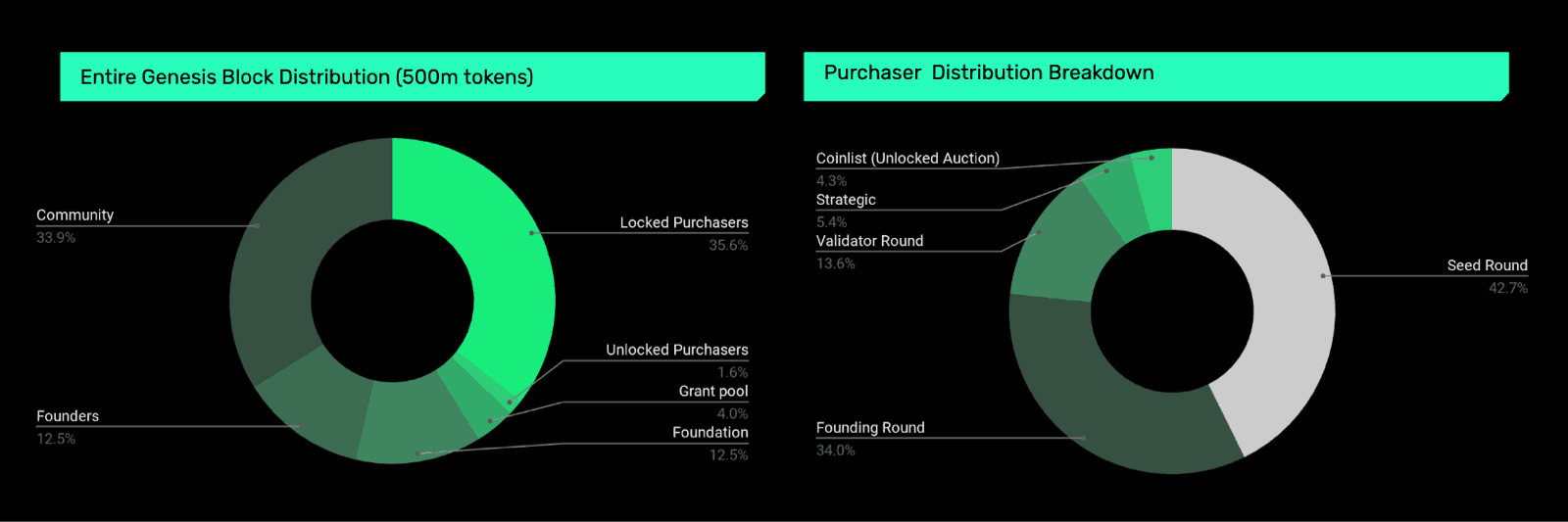
What we want: reflective [2], specific, difference-based [3] responses, coming from slower cognitive processes like absorbing new information and thinking about it. That's what produces a discussion which hasn't been had before, and those are the curious discussions. They may be less exciting in the sensational-indignant way, but that sort of excitement is not the curiosity which HN exists for [4], and we all know it gets boring after a while. Scorched earth is not interesting [5].
p.s. I know nothing and have no opinion about the topic of the story; I just know HN threads and can spot a brewing disaster when I see one. The last 700 (let's say) cryptocurrency-related threads have all been the same flamewar. That's enough of those; we're ready to move to the next exercise now.
Edit: well done everyone! Much better.
[0] https://hn.algolia.com/?dateRange=all&page=0&prefix=false&so...
[1] https://hn.algolia.com/?dateRange=all&page=0&prefix=true&sor...
[2] https://hn.algolia.com/?dateRange=all&page=0&prefix=true&sor...
[3] https://hn.algolia.com/?dateRange=all&page=0&prefix=false&so...
[4] https://hn.algolia.com/?dateRange=all&page=0&prefix=true&sor...
[5] https://hn.algolia.com/?dateRange=all&page=0&prefix=false&qu...