Perfect pitch is overrated. In college as a music student with excellent relative pitch, I routinely outscored peer students with perfect pitch when taking classical ear training courses. Perfect pitch is more of a parlor trick. It's occasionally useful when trying to tune a stringed instrument by yourself, and distracting if your ensemble starts to drift off key while remaining in tune with each other.
Also, trained relative pitch is better than untrained perfect pitch. For instance, if my instructor played four bars of a four-part bach chorale on the piano (sixteen quarter notes, perhaps a couple of eighth-note passing tones), I could fully notate it within three repetitions, sometimes on first listen - if I were initially told what key it was in. Someone with untrained perfect pitch would be able to tell if the instructor was lying about what key it was in, but they wouldn't be able to notate it. So in that scenario, the only thing it's useful for is recognizing what key it's in. If I hadn't been told, I could have just notated it in C and then transposed it to the right key later.
I would later learn that being able to notate a bach chorale by ear is nothing compared to the kind of ear skills you need as a jazz musician - but again, there, perfect pitch isn't important or super useful. We learn chord relations - it's all relative.
Your comment is analogous to a colorblind person telling everyone how overrated red and green are.
First, someone with "untrained" AP (I assume you mean no musical training) wouldn't be in a position where they'd be needing to transcribe a Bach chorale, would they? Any AP possessor with musical training--I am one--finds transcription trivially easy since there's only rhythm to figure out.
While it can be momentarily distracting when music doesn't match its normal key due to transposition or tuning issues, I can move past it without too much effort, although I am continually aware of the discrepancy. It's like the visual illusion where the ballerina can spin both clockwise and counterclockwise depending on your perspective.
The biggest benefit is being able to identify the key without having to do the initial hunt for the tonic by testing notes. This is very useful in an accompaniment situation.
Color is overrated in a world where most are colorblind. Red means danger or stop because you have seen a lot of stop signs. In a world of colorblind people, stop sign colors are chosen by the colorblind, based on something like "is this a cheap metal" rather than design language (which no longer exists for color). Instead we would use reflectivity or something to indicate danger. As to whether or not the varying-colored stop signs leads to a statistically significant number of color-sighted people blowing through them it is hard to say, but does seem a legitimate safety concern.
And this is the situation in music; keys are chosen based on the technical details of the musician rather than a design language. Meanwhile, we do have a design language based on relative pitch (e.g. a 5/7 chord "leads" to the tonic). Of course you can see that the same way you can see a purple stop sign, but you may lack some of the pattern-matching intuition of your peers.
As a musician with relative pitch and the child of a musician with perfect pitch, I have watched them get puzzled a lot navigating a design language that is very obvious to me. Perhaps you are a better musician than they are, or perhaps you avoid areas where the design language dominates. Either way, I would not trade places with you, unless the rest of society did also.
> Color is overrated in a world where most are colorblind.
That's speaking to the value in communication/collaboration.
The sensory experience itself would still have its own qualities even if other people are unable to appreciate them.
I went through a weird period of a few months in college when tones had a... character. I use that term rather than color because for some reason some of them were tied in with associations I had with the sound of people's voices. Not every pitch had this association, but recognizing the character let me identify the pitch.
The utility of this was certainly nothing astounding, but it was interesting to say the least. And it probably wasn't even absolute pitch.
And then, of course, there's the matter of utility that doesn't come from communication. Color vision doesn't just provide a field of aesthetic exploration, it actually lets people distinguish certain things more easily.
> Your comment is analogous to a colorblind person telling everyone how overrated red and green are.
Ooh, that is such an intriguing analogy. I think it's wrong.
The analogy should be a colorblind person complaining that the ability to guess html hex color values is overrated for the purpose of measuring, analyzing, and describing how a combination of colors affects the mise en scene in a given film still.
We must also add the complication that most televisions and places where people look at scenes the colors tend to gradually ramp down in frequency as the lights get tired.
In a lot of classical music, especially since 1900, pitch classes play a really fundamental role. When, say, G is a prominent pitch class for a while, and then I hear it come back a few minutes later, that lets me understand the structure of the piece better than if I didn't recognize it. So absolute pitch has a real use, and I don't think it's quite fair to put it on the level of "absolute hex color values".
Of course, there is a lot of subtle stuff going with color design in TV and movies that generally passes me right by, so maybe I should be spending more time trying to appreciate that and less time getting excited about identifying Gs in atonal music...
> When, say, G is a prominent pitch class for a while, and then I hear it come back a few minutes later, that lets me understand the structure of the piece better than if I didn't recognize it.
Give me a controlled example where the return of the prominence of pitch class G lets you understand the structure of a section of music.
Controlled example would mean:
* the orchestration used for the G is different at moment A and moment B, OR the piece is for a solo instrument. Otherwise you could be hearing a timbral connection and confusing it for a pitch class connection.
* the G at moment B is in a different octave. Otherwise you could be hearing a pitch connection and confusing it for a pitch class connection. (Esp. if you have perfect pitch.)
* the musical texture at moment A is different from moment B. Otherwise you could just be hearing a textural connection (e.g., big orchestral hit, moment where the woodwinds return, etc.) and confusing it for a pitch class connection.
* it's not a tonal piece of music. Otherwise you could be hearing the same or similar harmonic progression and confusing it with a pitch class connection.
* moment A is melodically dissimilar from moment B. Otherwise you could be hearing a melodic connection and confusing it with a pitch class connection.
I can't think of any musical moments that meet those constraints.
Oh, geez, I'm not going to go find some specific section of music that perfectly meets all these constraints. Often the pitches are at the same octave, by the way; I don't think that makes the connection any smaller. And often the texture is similar; many aspects of the music may be "recapping" and one of them happens to be pitch. I'm not "confusing anything with a pitch class connection" just because another connections happen to exist; I'm hearing more connections than I otherwise might.
I am definitely talking about non-tonal music in general, yes. Elliott Carter is a good example of a composer where I feel that absolute pitch helps me understand what is going on more than I would otherwise. But again I'm not going to dig out some particular measure of music that perfectly proves my point.
If this reply was insufficient for your needs (I fear it is) I apologize. I'm not trying to win some debate, just to elucidate a little how I feel that absolute pitch aids my music appreciation.
I’d argue that you are either at synesthetic or are somewhat pre-disposed to absolute pitch. I have heard others describe it the way you do but I do not hear tones that way.
I agree, with the caveat that the person with relative pitch may not know that the particular color is "green", but does know that-- given two different colors-- both will have the adjective "dark" in their names.
In that analogy, suppose a "mise en scene" teacher gives the students an assignment to analyze the use of color in a picture. Using music dictation classes as a guide here, what would happen is that the person with "perfect color" immediately labels all the colors in the scene with the correct crayon name. This intimidates all the "relative color" people because they can't do the mappings without reference to the crayon box. Thus, the "relative color" people assume they are at a lower skill level in their analysis than the "perfect color" person. (This is exaggerated by the fact that the "perfect color" student has the word "perfect" in their name.)
Once the students finish their mappings the teacher asks the "perfect color" student, "How would you describe the use of colors here?" The "perfect color" student shrugs-- it is a collection of all the colors which they correctly named. As a kid they got praise from the teacher for their amazing ability to effortlessly map colors to names. No one ever asked them about the relationship among colors. (Or, if they did, the student nodded along and then correctly mapped colors to names as necessary to do an end-run around the question.)
On the other hand, "relative color" students grew up getting color names wrong. Every color class teacher would come up with a different ad hoc color theory and ad hoc color exercise to explain to the student how to correctly map colors to names. Most of them were wrong, but the student noticed weird little successes in identifying the relationship among colors. In their quest to stop failing all the time, they started to inarticulately ask themselves about the meaning of color, enumerating all the relationships among colors that could identify to help them narrow down the possible right answers to perhaps only a handful of names.
Back to the mise en scene class. One of these "relative color" student pipes in. "It looks like a bunch of pastels." The teacher praises the "relative color" student and moves on to other exercises.
After class the "perfect color" student asks the "relative color" student how they knew to say the word "pastels." The "relative color" student starts to talk about different famous scenes that have pastels, a childhood memory they have of a pastel drawing that won a prize at school, etc. But none of that connects at all with the "perfect color" student, because they've only ever had to map colors to names. They've never considered the relationship among colors.
So now the "perfect color" student dreads going to class for fear of the teacher discovering the profundity of their inability to say anything of substance about color relationships. And the "relative color" students dread the same class because they have no idea that their lifelong work to that point considering the relationships among colors constitutes a kind of knowledge.
Finally, there are no "perfect color" students who-- through sheer curiosity and discipline-- took it upon themselves to systematically investigate the relationships among colors. The people who did that would have placed out of this mise en scene class.
Agreed. I had a special ear training class at Berklee for all the incoming freshman who aced placements, and if I recall correctly everyone in the class had perfect pitch. Transcribing was trivial across the board. I transcribed solos for jazz magazines as a side gig, and filled notebooks with solos in my personal practice.
Without a doubt, relative pitch and learning theory are important skills too, but they aren't mutually exclusive.
All of that is possible and frequently accomplished with relative pitch. I'm sure you don't disagree, but just for the benefit of other readers. Most of transcribing is recognizing intervals and rhythms, which does not require perfect pitch in the slightest. (If transcribing pitches were purely about recognizing pitches, then it would be maddeningly frustrating to transcribe a recording that is slowed down a few cents. But it can be done just as easily by someone with relative pitch, by focusing on intervals, key relations, and contextual memory.)
Do you believe that lack of perfect pitch should be recognized as a disability? Do you believe that lack of perfect pitch should prevent someone from certain licensed professions? Do you believe that lack of perfect pitch is a safety concern in some circumstances?
Because the answer is "yes" for colorblindness. It's just a wildly overstated comparison. I mean, even tone-deaf people don't experience the kind of difficulties that people with colorblindness experience. You could just say that I could never entirely understand the benefits of having perfect pitch since I don't have it, and maybe that would be true, but I have literally never experienced a professional musical situation where I felt or thought, "Oh man, if only I had perfect pitch - I would have succeeded where I just failed." And this includes directing gigs, accompanying gigs, performance gigs, etc.
I'm occasionally wistful I don't have synesthesia just because that sounds actually expansive, but I don't pine for perfect pitch at all.
Synesthesia is weird and can be pretty specific. I have it - I "hear" flavors, although it's more about tones than pitches (think drums and cymbals rather than pianos). And part of it is about shape. Flavors change over exposure time, just as a musical note changes volume and harmonic content over its duration. It's almost impossible to explain.
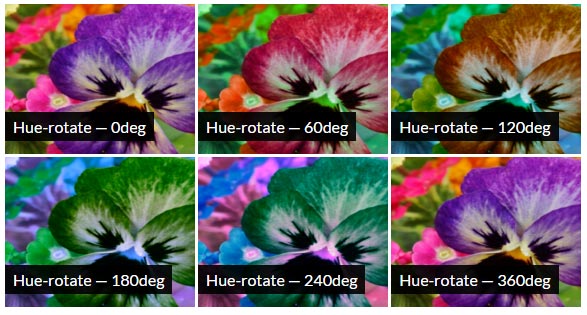
The comparison to colorblindness isn't precise: colorblind people don't have relative color perception. In terms of information content, over an entire song the information encoded in the scale is very small compared to the information encoded in the relative pitches of notes (in fact the ratio goes to 0 for long music). A grayscale image contains significantly less information, essentially a 2D chrominance array; the ratio of information is roughly constant and does not diminish for large images, or say a series of images (e.g. a grayscale movie). It would be more like applying unknown hue rotations [1] each time you look at an image.
As a colorblind person with synesthesia (but I don’t play any instruments), I can say it is absolutely expansive. I experience sounds partially as sight; I have ‘seen’ many shades I would never be able to distinguish in the real world. I believe it works the other way as well, allowing me to notice more sounds than others because I can visually distinguish them, and then listen for differences
I'm colorblind, and I think red and green are kind of overrated :). I didn't even know I was colorblind until I took a test at age 11. The extent which it has impacted my life negatively is absolutely negligible. Granted, it's not as though red and green don't exist to me. Some shades are just ambiguously red or green.
I'm not sure, but I think I tend toward absolute pitch. Individual notes out of context often make me recall specific songs. I'm not that accurate with my AP when I try to test it though, which is why I wouldn't claim to have perfect pitch.
However, I did take formal ear training in grad school, I found it really difficult. Perfect 5ths with different base notes don't "sound alike" to me. I had to rely on a lot of tricks to get by. I can transpose melodies in my head, so I could pattern-match a test interval to, say, the Superman melody (P5) or the Taps melody (P4). Or, if I were transcribing a melody or harmony, I could figure it out by function (chordal, stepwise, or chromatic motion). For leaps and intervals beyond an octave, I'm useless.
I'd also say that when I learn a song for voice, I'm mostly memorizing how to produce the right tones in-key, as opposed to moving by interval. I don't know how other people experience singing, but I suspect it might also be due to my bias toward AP.
This triggers some thoughts that I haven't quite joined up yet.
Likewise, some reds and some greens are interchangeable to me.
I imagine the different colouring of intervals that you hear in different keys is due to tempering. I don't have anything close to AP, but I tell chord progression in C# from the same in C. But purple is pretty much just a shade of blue to me.
I studied Indian classical music for quite a few years, which involved a lot of listening to and repeating phrases. I was fine with the longer stuff, but eventually found out I had some sort of deficit with interval recognition and struggled with replicating standalone 2 note phrases.
I have good harmony and rhythm instincts in practice, but am almost 'dyslexic' when trying to describe them formally.
I'm slightly wondering if this collection of deficits and compensatory mechanisms is what has led me to a fascination with flamenco. (Albeit with a little frustration at some of the more puritanical traditionalism.)
I agree. I was a music major long ago and at least as far as musical applications go, relative pitch is much more valuable. Hearing intervals and harmony is much more important for the performance of music.


Also, trained relative pitch is better than untrained perfect pitch. For instance, if my instructor played four bars of a four-part bach chorale on the piano (sixteen quarter notes, perhaps a couple of eighth-note passing tones), I could fully notate it within three repetitions, sometimes on first listen - if I were initially told what key it was in. Someone with untrained perfect pitch would be able to tell if the instructor was lying about what key it was in, but they wouldn't be able to notate it. So in that scenario, the only thing it's useful for is recognizing what key it's in. If I hadn't been told, I could have just notated it in C and then transposed it to the right key later.
I would later learn that being able to notate a bach chorale by ear is nothing compared to the kind of ear skills you need as a jazz musician - but again, there, perfect pitch isn't important or super useful. We learn chord relations - it's all relative.